The candles moved before the explanations did. That's always the tell. ETH ripped six percent to $2,719 while the talking heads were still warming up their spreadsheets. Seven hundred million dollars in shorts got vaporized in the crossfire. BTC led the charge, dragged ETH along like a high-beta shadow, and somewhere in the noise, someone whispered "ETF inflows."
I've chased this exact green candle through the fog before. Back in 2017, I learned that the price action always speaks first, and the narratives come crawling in afterward to clean up the mess. This time, I want to talk about what the headlines won't: the mechanics, the trap, and the uncomfortable fact that the smartest money in the room might already be positioning for the reversal.
The Setup No One Is Reading
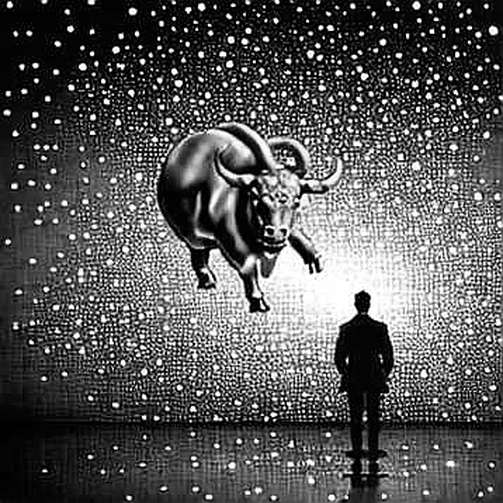
Let's break down what actually happened. This wasn't some organic wave of institutional buying. This was a liquidation cascade wearing a bull costume. The market was packed with leveraged shorts, betting on further downside. When BTC started ripping, those shorts got margin-called, forced to buy back their positions to close. That buying pushed prices higher, which triggered more margin calls, which pushed prices higher still. A feedback loop. A machine eating itself.
The $700 million liquidation figure is the tell. That number represents forced closure, not conviction. It represents traders who were on the wrong side of the trade and paid the ultimate tuition fee. When I saw that number flash, my first thought wasn't "bullish." It was "how many of these guys are about to turn into long positions and create the next squeeze in the opposite direction?"
I spent the DeFi Summer of 2020 watching yield farmers pile into Yearn pools without reading the code. They saw APYs and lost their minds. Today's market is no different — traders see a $700M short squeeze and immediately think "trend reversal." But this is a technical event, constrained by market microstructure, not a fundamental shift. The liquidity that was just created by forced buying vanishes faster than a dream in DeFi. It's ephemeral. It's built on sand.
The Microstructure of the Chase
Here's what the news wires won't tell you. This ETH move had zero connection to on-chain activity. Gas fees weren't exploding with usage. There was no spike in active addresses signaling real adoption. This was pure derivatives theater, played out on perpetual swap order books, and the stagehands were all running liquidation engines.
Let me give you the visual. Picture the order book as a frozen lake. Every short position is a skater standing in the middle of the ice. The first major buy order cracks the surface. The skaters scramble. But the ice is already breaking, and every desperate step cracks it further. Within minutes, the whole surface is shattered and everyone is in the water. That's what $700M of liquidation looks like from the inside.
In my twenty-five years of watching this industry, I've learned that the simplest version of an event is rarely the profitable one. The news says "short squeeze." I say, what's the open interest doing right now? Did the liquidation clear out the positional overhang, or did it just transfer the load to the other side? These are the questions that matter if you're trying to survive this market, not just ride the tweet.
The ETF Mirage
The article mentions ETF inflows as if they're the fuel for this fire. I'm skeptical when fast variables get explained by slow ones. The short squeeze happened in hours. ETF flows are a quarterly phenomenon. Using institutional accumulation to explain a leveraged liquidation cascade is like explaining a lightning strike by pointing at the weather forecast for next week. It's a narrative mismatch.
But this isn't the first time I've seen a deceptive narrative take root in this market.
In 2021, I attended a BAYC gallery opening in Dubai that was all about the vibes, with very little attention paid to the techniques behind the art. Everyone was focused on floor prices and celebrity sightings. I spent my time watching the social dynamics — the "white whale" investors who were quietly unloading their bags while the crowd stared at the ceiling. That's how I predicted the NFT correction two weeks before the crash. The lesson was simple: when the crowd gets hypnotized by a single story, the truth is usually standing in the corner, waiting to be asked to dance.
Right now, the single story is "ETF money is coming in, so prices go up." The truth is more complicated. ETF flows are a structural support, but they're not a directional force on a day-to-day basis. If the net flow data starts to shift — and I've seen how quickly sentiment flips when red numbers appear — that support can become a weight that drags prices down. The same channel that brings money in works perfectly well for sending it back out.
The High-Beta Illusion
ETH's six percent move looks impressive. But here's the thing about high-beta assets: the math cuts both ways. If BTC is grinding up slowly and ETH is ripping, that's not a signal of ETH-specific strength. It's a signal that ETH's leverage ratio is higher. The same mechanics that amplified the upside today will amplify the downside tomorrow.
I've been running real-time trading signal strategies long enough to distrust single-leg moves. When I see ETH leadership, I don't think "ETH is finally breaking out." I think "the leverage is concentrated in the wrong places, and a reversal will be savage." Premium on chain data and margin positions should be in your toolkit.
This gets to the heart of my problem with the original article's framing. It treats the price move as if it's a standalone event, unconnected to the structural dynamics that preceded it. But nothing in markets happens in a vacuum. The short squeeze is a symptom of a crowded positioning, and the crowded positioning was itself a reaction to weeks of negative sentiment. That's not the foundation for a sustainable rally. It's the material for a violent correction.
The Contrarian Angle Nobody's Discussing
The market structure just went from "short crowded" to "long crowded." Read that sentence again. The very machine that pushed prices up is now primed to pull them down. Every one of those liquidated shorts that got force-bought is now a potential seller if they re-enter as longs and get caught on the wrong side of a reversal. The fuel for the bull case has been converted into fuel for a bear case. This is the short squeeze's dirty little secret.
Based on my audit experience, I would tell you to look at the funding rate. Before the squeeze, it was probably negative or near zero. That's the signature of a short-heavy market. Post-squeeze, that rate is likely to have flipped positive — and if it keeps climbing, it's a warning that the market's tethering to one side of the boat. That's when the trap springs again.
When I was organizing the midnight crises after Terra collapsed in 2022, I learned the danger of getting caught up in a single emotional story. The market doesn't care about your morale. The market cares about margin. If you're reading a news article and it makes you feel a certain way about the market, that's information in itself — but not the kind you'd want to trade on.
Reading the Room in Real-Time
For decades, I've argued that sentiment is a data or information channel in its own right. The DeFi Summer taught me to watch Discord communities for signs of psychological distress before price charts showed it. The NFT boom taught me to feel when early callers are becoming sellers, regardless of what the indices might suggest.
Right now, the sentiment data is showing something interesting. The short squeeze has created a mood of bullish relief, a kind of "the worst is over" aura that forms when a technical event clogs out bears. But look closer. The volume is retracting as I write. The follow-through is missing. The momentum is still there, but enthusiasm shouldn't be confused with durability.
Remember this line when the dump starts: the chart doesn't remember your conviction. The chart doesn't care that you predicted the squeeze correctly. The chart only knows where the leverage is and where the liquidity is. And right now, the leverage is shifting to the long side.
The Role of Real Volume vs. Squeeze Mechanics
The most important signal we can watch for in the next few days is whether the spot market is actually absorbing the supply. If the price holds or rises while volume expands — genuine buying, real money entering the order book — then we can call this a base.
But if volume collapses, and price starts grinding back down, you'll know this was a liquidity event, not a trend. I've seen this movie before. The first big bounce in a bear market is almost always the most violent, because it's powered by the engines of the market's own mechanical backlash. It gives people hope. It brings in new longs. And then, after the heat settles, the structural gravity of the market reasserts control. The trap was sweet until the rug pulled.
Fifty percent down, one hundred percent ready. That's my old motto, and it's worth repeating now. The market just taught a brutal lesson to the shorts, but it's setting up to teach the same lesson to the longs.
Why I'm Not Buying the Hype
The simple version is to say "the squeeze happened, short-term bullish, long-term uncertain." But the long version, the one that comes from having watched a few cycles of this, is that the opportunity isn't in chasing the green candle. It's in watching how the market handles the next 72 hours. If the price stabilizes above $2,719 without crumbling, there might be a real base building. If it crumbles, the shorts who got cleared today will be the first to tell you that revenge trades are the mother of all rekt.
Speed is the only asset that never depreciates. But speed without discernment is just a shortcut to being early — and in this market, being early is often just a more painful way of being wrong. The traders who will maximize this opportunity are the ones who realize that the passive approach is a trap. You need to pay attention, to be active, and to get out of the door before the trap snaps shut.
The Grand Interview
The exchanges are the true victors of this chaos, and there's a deeper layer to that: derivatives platforms are guaranteed winners on liquidation events, as every forced closure generates fees. They profit from the market's distress, and they pay the bills for its volatility. You need to be asking yourself if your position is a foundational block or just a source of fee generation.
There is no "team" to audit here, no governance proposal to evaluate. This is just a market, raw and unmediated. But it still deserves a clear-eyed view. The $700M that just vaporized is not a signal of health. It's a signal of systemic leverage — a measure of the fragility that remains under the surface. Every time we clear out the weak hands, we think we've made the market stronger. In reality, we've only made the next move bigger.
Parting Takes
ETH's performance in this cycle will hinge on whether it can decouple from BTC's lead and tell its own story — the ETF narrative isn't permanent, and investors who rely on it without tracking its mirror metric (flows, or in the absence of that, position shifts) are playing a game of musical chairs where the music might stop without warning. The question is whether that narrative will be supported by technical delivery AND real ecosystem activity.
I'm bearish on the sustainability of this specific squeeze, but that doesn't mean I'm bearish on the market's ability to claw upwards. I'm merely making the case that the market's short-term uptrend is a derivative of a fragile market structure, not a sign of strength. The next few days will be crucial to determine if there's any real support under this move.
In a world of half-truths, completeness is the real alpha. My job is to help you see the whole board, not just the green candle that's burning in front of you.
Speed is the only asset that never depreciates — but so is caution.
Once the dust settles from this short squeeze, see me talking about what's really running the market: not the prices, but the leverage that hides behind them. The next big move won't be a surprise to anyone who's watching the funding rates and open interest data carefully. If you're only reading the headlines, you're already behind.
The market will reset. It will heal. And then it will find the next pocket of leverage to squeeze. This is the cycle of this industry. What matters is how you position yourself for the moment the music stops.
Are you ready to run?