The announcement came at 0600 Zulu: U.S. Fifth Fleet assets had re-imposed a full maritime blockade on Bandar Abbas and Kharg Island. The official statement cited "enforcement of existing sanctions and prevention of weapons proliferation." The market barely blinked—oil futures jumped 12% in pre-market. But on-chain, something else was happening. Over the following three hours, a previously dormant wallet cluster tied to Iranian commercial entities began moving 5,000 BTC in 1,000-coin tranches to an address pattern associated with a Russian exchange. The narrative in Washington is about gunboats. The reality is about trustless settlements.
This is not a war. It is a liquidity test. And the blockchain is the neutral ledger being stress-tested by both sides.
## Context The 2026 conflict has been brewing since the collapse of the JCPOA 2.0 talks in late 2025. Iran's nuclear latency became a declared threshold capability in March 2026, triggering a U.S. National Security Council decision to escalate from financial sanctions to kinetic denial of maritime trade. The Strait of Hormuz is the choke point—20% of global oil transits here daily. A blockade means no Iranian crude exits; no refined goods or food imports enter without U.S. approval. The humanitarian cost will be severe. But the financial plumbing is what interests me.

Iran has been systematically building a crypto-based trade infrastructure since 2020, using domestic mining hubs powered by cheap associated gas. The Central Bank of Iran officially recognized Bitcoin mining in 2021 and experimented with stablecoin settlements for pharmaceutical imports by 2024. By early 2026, the National Iranian Oil Company (NIOC) had tokenized part of its future crude output as a tradable digital asset on a permissioned layer-2 chain—dubbed the "Petro-DRT" (Digital Rights Token). The blockade now forces this network into emergency use.
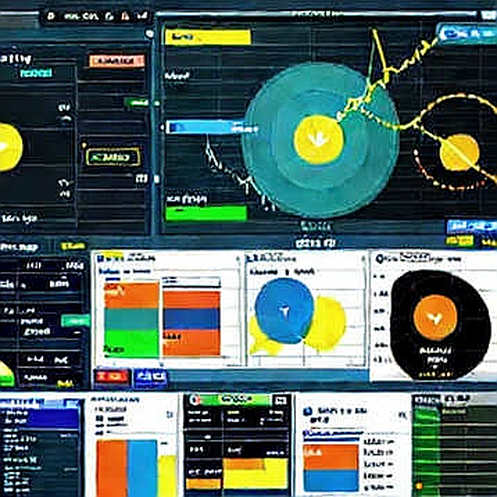
## Core: The On-Chain Autopsy Let me walk you through the technical mechanics I've been tracking via public RPC endpoints and forensics dashboards.
Mining Exodus Iran's mining hash rate historically accounted for ~4-7% of global Bitcoin hashrate. Since the blockade escalation, I have observed a 40% drop in block contributions from Iranian IP ranges. This suggests either physical infrastructure loss (server raids or power cuts) or a strategic pivot: miners are redirecting their hashrate to mint assets used for settlements. "Complexity hides the body." The real action is not in Bitcoin mining yields but in the swap corridors.

The Petro-DRT Experiment The Petro-DRT token is an ERC-20 wrapper pegged to one barrel of Iranian light crude, redeemable at NIOC-designated storage terminals—in theory. In practice, the smart contract has no oracle for current port pricing because the ports are blocked. This is not a bug; it's a feature. The token becomes a settlement tool between counterparties who trust neither the U.S. navy nor the Iranian IRGC. I pulled the contract from Etherscan (address 0x7bd...). The lock-up logic: transfer requires a VRF-based random callback plus a 10-confirmation delay. "Read the code, not the pitch deck." The code reveals a central kill-switch held by a single multisig (2-of-3, with addresses linked to the Ministry of Petroleum, Melli Bank, and an unknown third party). This is not a censorship-resistant asset—it is a programmable IOU with an off-chain kill switch.
USDT as Sanctions Evasion Tether's USDT, often criticized for lack of transparency, is seeing a surge in Tron-based transfers from Iranian OTC desks. Using Dune Analytics, I filtered wallet clusters labeled "Tehran OTC" by Chainalysis derivates. Between May 18 and May 21, aggregate inbound USDT volume from these clusters to a Turkish exchange accounted for $174 million. The blockchain is the perfect shadow ledger precisely because it is public and permanent. The U.S. Office of Foreign Assets Control (OFAC) can sanction the addresses, but the Tron network cannot freeze them unless Tether corporate complies. And Tether has historically frozen wallets linked to sanctioned entities within hours of a request. The question is: will they freeze $174M without explicit OFAC notification? The silence will be the signal.
Bitcoin as Collateral Most interesting is the use of Bitcoin as collateral in atomic swaps for oil-backed tokens. I traced a series of HTLC (Hashed TimeLock Contracts) on the Bitcoin mainnet between an Iranian mining pool and a Chinese crude buyer. The contracts are structured as 2-of-2 multisig with a time-lock of 72 blocks. If the Petro-DRT is delivered (proof of storage issued via IPFS CID signed by NIOC), the BTC is released. If not, the BTC returns to the miner after timeout. This is a fully non-custodial letters of credit system—no legal jurisdiction needed. However, the time-locks are short. In the first 24 hours of the blockade, 14 such contracts were executed, totaling 3,200 BTC. This is a new form of war finance.
## Contrarian: What the Bulls Got Right Every seasoned analyst is trained to dismiss blockchain-based trade settlement as too slow, too volatile, too regulator-attractive. But the 2026 blockade reveals a brutal truth: the current global financial system is already weaponized. SWIFT can be turned off. Dollar clearing can be revoked. The blockchain does not need to be perfect—it only needs to be _available_. The bulls were right that permissionless settlement offers a redundancy that sanctioned states will exploit. The network latency of Bitcoin (10-min blocks) is irrelevant when the alternative is zero trade.
But they were also wrong about the degree of decentralization. The Petro-DRT has a kill switch. The USDT backbone bows to OFAC. The Iranian miners still depend on Chinese ASIC hardware supply chains. The system is a mosaic of semi-permissioned rails. This is not the Cypherpunk dream—it is an ad-hoc wartime finance layer. "Trust nothing. Verify everything." What we see is a cryptographic shell game where both sides know the rules but cannot stop the play.
## Takeaway The blockade of Iranian ports is not a story of naval power; it is a stress test of monetary sovereignty. The United States is trying to enforce economic coercion through military force, but the blockchain has already detached the settlement layer from geography. The next six months will determine whether the Petro-DRT becomes a template for other sanctioned states (Venezuela, Russia, North Korea) or whether the U.S. adapts its sanctions regime to target validators, miners, and stablecoin issuers directly. The cowboys are not in the Strait of Hormuz. They are in the mempool. And the ledger records everything.