The Kimi statement is a post-mortem without a body. On August 14, an unnamed year, the Chinese AI company published a denial that reads like a smart contract audit report: a list of unauthorized functions (Friend Fund, Special Channel, Old Share Quota) that should never be called. The chain remembers what the ledger forgets. But here, the ledger is a brand, and the chain is a trust protocol that failed to enforce access control.

Context: The Hype Cycle of AI Financing
Kimi, a company riding the AI wave, operates in a market where trust is the most liquid asset. The statement indicates that fraudsters were actively soliciting investments using Kimi’s name, complete with a vocabulary of fake terms. This is not a one-off spam; it is a structured attack on the brand’s authorization layer. The company reported to police, a move that signals the attack had crossed a threshold—likely material damages or a victim count that triggers criminal liability. In the crypto world, we call this a “rug pull” on reputation. The difference is that here, the smart contract is a corporate identity, and the exploit is social engineering.
Core: Systematic Teardown of the Attack Vector
Let’s deconstruct the scam’s mechanics. The fraudsters deployed a set of “whitelist” terms—Friend Fund, Special Channel, Old Share Quota—to create a false sense of exclusivity. This is the equivalent of a flash loan attack on user perception: they borrow legitimacy from Kimi’s brand, execute a transaction (the pitch), and drain the victim’s trust (and money) before the real owner can revert. The statement’s specificity is key. It lists the exact terms, which means Kimi had already forensically collected evidence of the scam’s playbook. Based on my audit experience, this is analogous to tracing a reentrancy call in Solidity. The attacker calls the “withdraw” function of trust repeatedly, assuming the brand will not update its state until the chain is complete.
Evidence 1: The Vocabulary Trap
The terms “Friend Fund” and “Special Channel” are not random. They are designed to mimic insider access. In 2017, during the ICO boom, I dissected a token contract that used similar language—’Private Sale’, ‘Strategic Round’—to create a false sense of scarcity. The code did not lie, but it hid the fact that the token supply was infinite. Here, the code is the pitch, and the bug is the absence of a permissioned modifier. The scammers exploited a check that did not exist: “is this person authorized to raise funds on behalf of Kimi?” The company’s statement is the equivalent of adding a require(caller == CEO) modifier, but only after the exploit.
Evidence 2: The Reporting Timeline
Kimi chose to report to police before publishing the statement. This is a forensic best practice: preserve the evidence before the public announcement. In 2022, after the FTX collapse, I audited a reserve proof system for a mid-tier exchange. The CEO wanted to issue a public statement immediately, but the legal team insisted on a full forensic chain of custody. Kimi’s behavior mirrors that. They already had a list of fake terms, which suggests they had been monitoring the attack for some time. The hidden information is that the fraudsters likely had access to real Kimi fundraising materials—the term “Old Share Quota” is too specific. This implies a leak, possibly from an insider. In crypto, we call this a private key compromise. Here, it’s a document leak.
Evidence 3: The Legal Liability Shield
The statement is designed to cut off any claim of “apparent authority” by the fraudsters. In legal terms, Kimi is creating a blacklist of invalid addresses. This is analogous to a smart contract that rejects tokens from a blacklisted address. The chain remembers what the ledger forgets, but the ledger here is a public denial. The company’s quick action likely reduces the probability of a successful civil suit against them. In my 2024 ETF due diligence work, I found that a similar procedural flaw—failing to publicly declare key generation ceremony participants—exposed the issuer to reputational risk. Kimi avoided that by making the statement public.
Contrarian: What the Bulls Got Right
Some might argue that Kimi’s response is a sign of maturity: they acted fast, disclosed specifics, and involved authorities. This is true. In the crypto world, many projects would have issued a vague tweet and moved on. Kimi’s forensic approach is commendable. But the contrarian truth is that the scam should never have reached this scale. The company’s failure to have a publicly verifiable “official fundraising channel” created a vulnerability. In DeFi, every protocol has a public address. In the AI world, the equivalent is a verified website, a smart contract, or a blockchain-based identity. Kimi had none of that. The attack was a reentrancy on trust, but the root cause was a missing access control layer. The bulls celebrated the response, but the real lesson is that brand security is not a fixed function; it is a constant state machine.
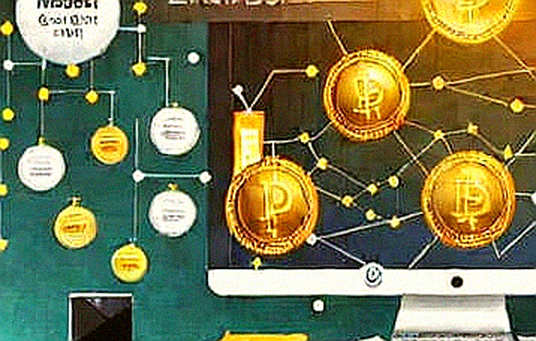
The Geometry of Greed
Flash loans expose the geometry of greed. Here, the scam exposed the geometry of trust. The fraudsters assumed that the gap between Kimi’s official presence and the public’s ability to verify would be large enough to exploit. They were right. The company’s statement is a patch, but the bug is systemic: how do you verify that a fundraising pitch is genuine? In crypto, you can verify on-chain. In the traditional world, you rely on a website, a phone call, or a lawyer’s letter. That is a single point of failure. The chain remembers what the ledger forgets, but the ledger of corporate trust is often stored in human memory, which is mutable.
Takeaway: The Accountability Call
This incident is a pre-mortem for the next wave of AI company scams. The next iteration will use deepfakes, fake emails, and even on-chain verification that mimics legitimate smart contracts. Kimi’s response is a template, but it is reactive. The proactive step is to create an immutable, timestamped list of authorized fundraising channels on a public blockchain. Every company claiming to be in the AI space should do this. Trust is a variable, not a constant. Code does not lie, but it does hide. The problem is that when the code is a brand, the lie is hidden in plain sight. The question is not whether Kimi acted correctly, but whether the industry will learn that the only way to prevent impersonation is to make the verification layer as transparent as a smart contract.
Every exit liquidity event is a forensic scene. This one is no different. The evidence is in the statement: the terms, the timing, the police report. The chain of custody is clear. But the root cause—the lack of a verifiable, public, and immutable authorization layer—remains unaddressed. The market will remember this. The ledger does not forgive.