There is a particular kind of silence that follows a currency's death. It is not the silence of peace, but the silence of a held breath—the moment when a nation collectively realizes that the paper in their pockets has become a promise no one intends to keep. Over the past weeks, reports have emerged from Tehran describing the Iranian rial's collapse, a word so final it feels almost surgical. Yet, as I parsed the fragmented data points and the absence of hard numbers, I found myself returning to a question that haunts every decentralized system: when a centralized authority loses the trust of its people, what exactly is left to govern?
We built the temple, but forgot who the god is. In Iran, the temple was the rial, and the god was the state's credibility. Now, both are crumbling.
This is not merely an economic story about exchange rates or inflation indices. It is a story about the fundamental architecture of value—and about what happens when the code that underpins a society's financial contract is breached. As someone who has spent years analyzing the intersection of monetary policy and decentralized technology, I see in Iran's crisis a mirror held up to the global financial system. The rial's collapse is not an isolated anomaly; it is a stress test for the very concept of fiat trust, and it carries profound implications for those of us who believe that code can offer an alternative to fragile human promises.
The context here is essential. Iran operates under a multi-tiered exchange rate system, where the official rate diverges wildly from the free-market rate. This is not a technical quirk; it is a structural admission that the state cannot control the value of its own currency. When the rial crashes, it is not merely a market correction—it is the visible failure of a policy framework that has long prioritized control over credibility. The Central Bank of Iran finds itself in a classic monetary crisis trap: raise interest rates to defend the currency and deepen the recession, or hold rates and watch capital flee. There is no painless path, and the leadership knows it.
My analysis, based on the general principles of monetary economics and the well-documented realities of Iran's sanctions-constrained economy, suggests that this is not a transient shock but a systemic unraveling. The rial's collapse is the convergence of multiple forces: external sanctions that sever Iran from global financial infrastructure, fiscal deficits that force the central bank into implicit monetary financing, deeply negative real interest rates that punish savers, and a public whose confidence has been eroded by years of broken promises. The hidden logic here is that in the absence of a solution to external sanctions and internal fiscal discipline, any exchange rate intervention is merely a palliative, not a cure.
What strikes me most is the asymmetry of this crisis. The wealthy—those with access to dollars, gold, real estate, or cryptocurrencies—can hedge against the rial's decline. The middle class, whose savings are denominated in rials, watches their wealth evaporate in real time. This is not a natural disaster; it is a policy-induced transfer of wealth from the vulnerable to the connected. The social consequences are predictable: rising youth unemployment, which has long hovered above twenty percent, will likely climb further. Real wages will continue to lag behind price increases, pushing consumption toward survival mode. And the pensioners, the most fragile segment of any society, will see their fixed incomes erode to the point of destitution.
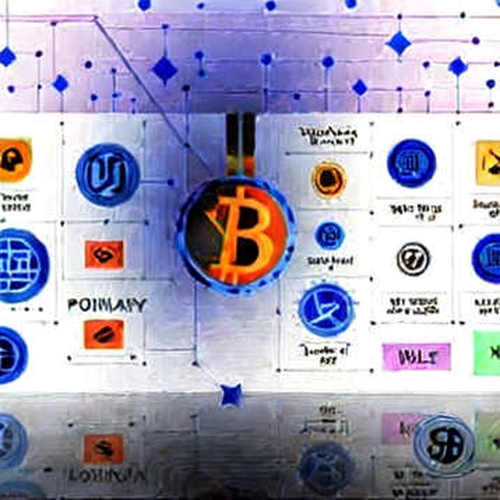
Code is law, until the law breaks the code. In Iran, the law of the rial has been broken by the very institutions meant to uphold it. And when a nation's currency fails, the people do not simply accept their fate—they seek alternatives. This is where the crypto dimension becomes not just relevant, but central. Iran has consistently ranked among the highest countries in global cryptocurrency adoption, and for good reason. When your currency is collapsing and your access to global banking is severed, Bitcoin and stablecoins like USDT become not speculative assets but survival tools. They are the only escape hatches from a system that has failed you.
I recall my own experience during the 2020 DeFi Summer, when I interned at a Copenhagen-based DAO and spent months investigating the real-world implications of algorithmic stablecoins. I interviewed twelve users who had lost savings due to oracle failures, and their stories taught me something that no textbook could: the gap between smart contract perfection and human vulnerability is where the real risk lives. Iran's situation is the inverse of that lesson. Here, the human vulnerability is not caused by code failure but by code's absence—by the lack of a decentralized alternative that could offer stability when the centralized system collapses.
The core insight I want to offer is this: Iran's rial collapse is a case study in the failure of centralized trust, and it provides the strongest argument yet for the necessity of decentralized monetary systems. But we must be careful not to romanticize this. The crypto community often celebrates adoption spikes during currency crises as a victory for decentralization. Yet, what we are witnessing in Iran is not a philosophical embrace of blockchain ideals; it is a desperate scramble for any asset that can hold value. The people fleeing the rial are not seeking to escape the state; they are seeking to survive it. This distinction matters because it shapes how we should think about the role of crypto in such crises.
Authenticity is a signal lost in the noise. In the noise of Iran's economic collapse, the signal is clear: when a government's monetary policy becomes indistinguishable from predation, the people will find their own escape routes. The question is whether we, as builders and evangelists of decentralized systems, are prepared to meet them where they are—not with ideological purity, but with practical tools that can function under the most extreme conditions.
Let me be contrarian for a moment. The prevailing narrative in crypto circles is that Iran's crisis will drive mass adoption of Bitcoin and stablecoins, and that this is an unqualified good. I believe this narrative is dangerously incomplete. The same forces that drive Iranians toward crypto also drive governments to crack down on it. If the rial's collapse accelerates capital flight through crypto, the Iranian regime will almost certainly respond with stricter capital controls, potentially targeting exchanges and peer-to-peer networks. The very tools that offer escape today may become the targets of tomorrow's repression. We must ask ourselves: are we building infrastructure that can withstand state-level opposition, or are we building sandcastles that will be washed away by the next wave of regulation?
This is not a hypothetical concern. I have seen how quickly governments can move to assert control over digital assets when they perceive a threat to their monetary sovereignty. The sanctions on Tornado Cash set a dangerous precedent, establishing that writing code can be treated as a crime. If Iran's leadership decides that crypto is facilitating capital flight, we could see similar actions taken against developers and users alike. The crypto community must be prepared for this reality, not by retreating from the mission, but by building systems that are resilient to such attacks—systems that are truly decentralized, not just in name but in practice.
The ledger remembers, but the heart forgets. As I write this, I am reminded of the emotional toll that such crises take on ordinary people. During the 2022 market crash, I spent three months in near-total isolation, re-reading Satoshi's whitepaper and the works of Hannah Arendt, seeking solace in foundational texts. I wrote an essay called "Silence in the Noise," exploring how market crashes strip away ego to reveal core values. Iran's crisis is not a market crash; it is a national trauma. The people of Iran are not just losing money; they are losing faith in the institutions that were supposed to protect them. This is a wound that will not heal quickly, and it will shape the country's political and social landscape for years to come.
For the global markets, the direct contagion from Iran's crisis is limited—the country's financial system is largely isolated from the international economy. But the indirect effects are significant. The most immediate channel is oil. Iran is a major producer, and any instability that threatens supply could add a risk premium to global prices. The second channel is geopolitical: a desperate regime may be more likely to engage in risky behavior, from nuclear brinkmanship to regional proxy conflicts, to distract from domestic failures. The third channel, and the one most relevant to my readers, is the crypto market itself. As Iranians seek refuge in digital assets, we may see increased demand for stablecoins and Bitcoin, potentially creating price pressure and liquidity flows that are difficult to predict.
There is also a deeper, more structural implication. Iran's crisis is a reminder that the current global financial system is not designed to handle the stress of a major economy collapsing under sanctions. The dollar-based system, for all its strengths, is a tool of geopolitical power. When that power is wielded against a nation, the consequences are not just economic but humanitarian. This raises uncomfortable questions about the ethics of financial warfare and the role that decentralized systems can play in mitigating its worst effects. If we believe that access to sound money is a human right, then we must be willing to defend that right even when it conflicts with the interests of powerful states.
Faith in the protocol is not faith in the people. This is a lesson I have learned repeatedly in my years in this industry. The protocols we build are only as good as the communities that use them. In Iran, the community is not a group of tech enthusiasts; it is a population fighting for economic survival. They do not care about the philosophical nuances of decentralization; they care about whether they can feed their families. If we are to serve them, we must move beyond our own ideological comfort zones and build tools that are accessible, reliable, and resilient. This means focusing on user experience, on education, and on the practical realities of life under sanctions.
I have been privileged to work on projects that bridge the gap between AI and blockchain, and I have seen how zero-knowledge proofs can protect privacy in ways that are directly relevant to people in repressive environments. But I have also seen how easily such tools can be co-opted or shut down. The work of building truly liberating technology is not for the faint of heart. It requires a commitment to the long game, to the slow and patient work of building trust in systems that are designed to be trustless.
As I look at the situation in Iran, I am reminded of a conversation I had with a local scholar in Copenhagen about the nature of digital provenance. We were discussing NFTs and the fragility of digital ownership, and he said something that has stayed with me: "The blockchain does not care about your suffering. It only cares about the math." This is both the strength and the weakness of our technology. It is a strength because it means the system cannot be corrupted by human emotion. It is a weakness because it means the system cannot respond to human need. We must be the ones who bridge that gap, who bring compassion to the code.
We traded soul for speed, and called it progress. This is the critique I would level at the broader crypto industry, which often prioritizes innovation over ethics, speed over safety. In our rush to build the future, we have sometimes forgotten the people we are building for. Iran's crisis is a reminder that the stakes are not abstract. They are life and death. The people of Iran are not looking for a get-rich-quick scheme; they are looking for a way to preserve their dignity in the face of overwhelming odds. If we can provide that, we will have fulfilled the true promise of decentralization. If we cannot, we will have failed the very people we claim to serve.
Let me offer a concrete scenario for how this might play out. In the short term, the rial will likely continue to weaken, as the fundamental drivers of its decline remain unaddressed. The Iranian government may attempt to implement currency reform, such as removing zeros from the denomination, but this will be cosmetic at best. The real question is whether the regime can secure some form of external relief, perhaps through a renewed nuclear agreement or sanctions relief. If such relief does not materialize, the economic crisis will deepen, and the political pressure on President Pezeshkian will intensify. The regime may respond with a combination of repression and populist measures, but neither will address the underlying structural problems.
In this environment, the demand for crypto assets in Iran will likely continue to grow. This is not a prediction of a massive price surge; it is a recognition of a structural shift in how Iranians store value. The rial has lost its function as a store of value, and it is rapidly losing its function as a medium of exchange. In its place, we are seeing the emergence of a parallel economy based on hard currencies and digital assets. This is a profound transformation, and it has implications that extend far beyond Iran's borders. It is a demonstration that when a state fails to provide sound money, the people will find their own solutions. This is the ultimate validation of the decentralized ethos, but it is also a warning: if we do not build systems that are accessible and resilient, the people will find alternatives that are less aligned with our values.
Truth is not a token you can trade. This is a principle I hold dear, and it is particularly relevant in times of crisis. In the noise of market speculation and geopolitical maneuvering, it is easy to lose sight of the human truth at the center of the story. The truth is that the people of Iran are suffering, and they are suffering because of decisions made by powerful actors who do not bear the consequences of their choices. The truth is that our financial system is not neutral; it is a tool of power, and it can be used to oppress as easily as it can be used to liberate. The truth is that we, as builders of new systems, have a responsibility to ensure that our tools are used for liberation, not oppression.
I do not have easy answers to the questions that Iran's crisis raises. I am not a policy expert, and I do not pretend to understand the full complexity of the situation on the ground. But I do know that the current trajectory is unsustainable. The rial will not recover on its own, and the social pressures will continue to build. The question is not whether change will come, but whether it will come through peaceful evolution or violent rupture. As someone who believes in the power of decentralized systems to create more just and equitable societies, I hope for the former. But I am also a realist, and I know that hope is not a strategy.
What is the takeaway from all of this? For the crypto community, it is a call to action. We must build systems that are truly resilient, that can withstand the pressure of state opposition, and that can serve people in the most extreme circumstances. We must move beyond the echo chambers of our own industry and engage with the real-world challenges that people face. We must be willing to make sacrifices, to take risks, and to stand up for the principles we claim to believe in. This is not a game; it is a mission.
For the broader world, the lesson is simpler but no less profound: when you break a nation's currency, you break its people. The sanctions that have been imposed on Iran have not achieved their stated goals; they have only caused immense suffering and pushed the country toward the brink of collapse. It is time to reconsider the tools of financial warfare and to seek more humane and effective approaches to international relations. The blockchain cannot solve this problem, but it can offer a glimpse of a different way—a way based on trust, transparency, and mutual respect, rather than coercion and control.
As I finish this analysis, I am left with a sense of solemn responsibility. The events unfolding in Iran are not distant abstractions; they are a test of our values and our commitment to the ideals we profess. We built the temple, but we must remember who the god is. The god is not the code, and it is not the protocol. The god is the human being, struggling to survive, seeking dignity and meaning in a world that often seems determined to deny them both. If we can keep that in mind, we have a chance to build something truly worthy of the name decentralization. If we cannot, we will have built just another monument to our own hubris. The choice is ours, and the time to choose is now.