It was a Tuesday afternoon in Copenhagen, and I was sitting in a small café near the university, staring at a transaction log. A friend from Lagos had just sent me a screenshot of his USDT transfer on TRON — a routine movement for a small OTC trader. But the numbers told a story I hadn't expected: he had paid 0.8 TRX in fees, not through the usual burn mechanism, but through a rental service called TronBid. He didn't know how it worked, only that it was cheaper. Behind every hash, a heartbeat. That moment crystallized a question that has been gnawing at me: what happens when the resource layer of a blockchain becomes a marketplace, and the people who power it are not validators but everyday TRX holders?
When I first started Ethos Ledger back in 2017, I spent hours interviewing investors who had lost savings to rug pulls. I learned that technical literacy is secondary to emotional resilience. But the crypto space has matured. Today, we are not just dealing with scams; we are dealing with infrastructure that claims to serve the people. TronBid is a perfect case study. It is not a Layer 1 or a DeFi protocol. It is a resource matching platform — a marketplace for TRON network energy and bandwidth. And if you look closely, it reveals something profound about what we mean by "decentralization."
The Context: Why Energy Matters
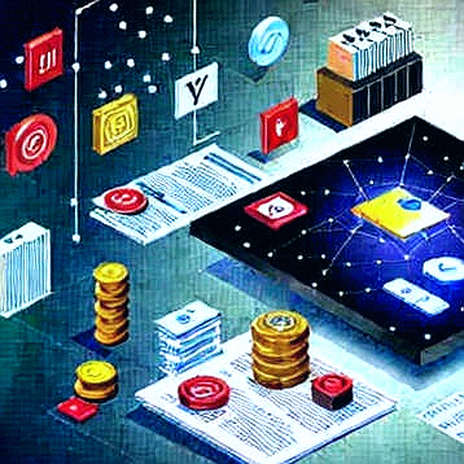
TRON's network resources are a peculiar beast. To send a USDT transaction, you need Energy — a computational resource obtained by freezing TRX. If you don't have enough Energy, the network burns TRX to compensate. This creates a direct cost for every transaction. For high-frequency users — OTC desks, exchanges, remittance services — the burn can be substantial. The alternative is to freeze TRX, but that requires locking up capital. TronBid steps in as a middle layer: it connects TRX holders who have idle Energy with users who need it, creating a bilateral market. The core mechanism is simple: Energy Delegation from the TRON protocol, repackaged through a P2P order book, a Quick Rent service, a Telegram bot, and an API for institutional integration.
I have seen similar models before. During DeFi Summer, I audited Uniswap V2 liquidity mechanisms and discovered that gas fees disproportionately hurt low-income users. The same principle applies here. TronBid is not about technical breakthroughs; it is about accessibility. It lowers the barrier to entry for users who cannot afford to freeze 10,000 TRX. That is a human-centric design choice. Code is law, but empathy is truth.
The Core: A Technical and Values Analysis
Let me be direct. TronBid's technology is not revolutionary. It is a product-layer innovation — a matching engine built on top of TRON's native Energy delegation. The platform offers four access points: a P2P market where buyers and sellers set prices, Quick Rent for instant capacity, a Telegram bot for mobile-first users, and an API for enterprise integration. This is not a new consensus mechanism or a layer 2 scaling solution. It is a marketplace, and its value lies in aggregation and user experience.
But here is where it gets interesting. Based on my experience analyzing protocols, I noticed a critical omission in the public documentation: the article does not disclose how settlements are executed. Is it a smart contract that automates the delegation? Or is there a centralized order book that intermediates the transaction? The trust model is unclear. If TronBid is a custodian of funds, then it introduces counterparty risk. If it is fully on-chain, it needs an audited contract. The absence of this information is a red flag — not because the project is necessarily bad, but because transparency is the foundation of decentralized trust.

I have been through the 2022 bear market. I lost 70% of my portfolio and learned that resilience is a narrative, not a financial metric. That experience taught me to look for the human cost of smart contracts. In TronBid's case, the human cost is low because the product is a utility service. But the sustainability of the model depends on pricing efficiency. The rental price must remain lower than the opportunity cost of freezing TRX or the burn cost. Otherwise, users will revert to the default. This is a delicate balance.
The Contrarian: The Silent Cost of Efficiency
Here is the counterintuitive angle. TronBid is often framed as a cost-saving tool, but it may actually weaken TRX's deflationary narrative. Every time a user rents Energy instead of burning TRX, the network loses a deflationary event. The TRX that would have been destroyed is instead redistributed to stakers. This is a net positive for holders who stake, but negative for the token's scarcity narrative. In a market that prizes supply reduction, this could be perceived as a drag on value.

Moreover, the platform's success depends on the continued growth of USDT on TRON. If stablecoin activity shifts to other networks, TronBid's addressable market shrinks. The article I read did not provide any user data, transaction volumes, or competitive comparisons. That silence is telling. I suspect that TronBid is still in its early growth phase, relying on subsidies to attract users. The Quick Rent feature, with its fixed pricing, might be operating at a loss to build liquidity. Surviving the winter to plant the spring.

Another blind spot: the regulatory lens. TronBid currently has no native token, so it avoids securities classification. But its supply side — TRX holders earning rental income — could be scrutinized as a form of unregistered investment contract if the platform markets it as a yield opportunity. The Telegram bot and anonymous TRON addresses also raise AML concerns, especially for cross-border remittances. The ledger remembers, but the heart forgives. But regulators do not forgive easily.
The Takeaway: A Vision for Resource Sovereignty
I believe TronBid represents a microcosm of what the crypto industry must become: a service that empowers individuals without requiring them to become experts in blockchain mechanics. The platform's philosophy is sound — let resource holders and consumers meet directly, without intermediaries. But the execution must be transparent. I want to see the audit reports. I want to know if the order book is operated by a centralized server or a smart contract. I want to see the team's identity.
In the chaos of the reset, we find clarity. Clarity that true decentralization is not just about code; it is about trust that is earned through openness. TronBid has the potential to become a vital piece of TRON's infrastructure, but only if it embraces the values that brought us here: philosophy before protocol, people before profit.
As I left that café in Copenhagen, I sent a message to my friend in Lagos: "Keep using TronBid, but ask them who runs the engine." That is the question every user should ask. Because behind every hash, there is a heartbeat — and we need to know whose heart it is.