The Metronome and the Market: What Kalshi's Wash Trading Signals Reveal About Regulated Finance
In the quiet spaces between two trades, a machine kept time.
According to analysts tracking activity on Kalshi, a bot bought a contract at 0.2 cents and sold it at 0.1 cents, then repeated the motion every four seconds for nearly two months. There is no economy that rewards this behavior. Every cycle locks in a loss. And yet the rhythm never broke — not for days, not for weeks, but for the better part of a quarter, ticking against the logic that a rational trader should eventually correct course or run out of capital.
I have spent enough years inside audit rooms to recognize what that rhythm describes. It is not a trader. It is a signal. When a losing sequence repeats with mechanical precision, it usually means the cost of the loss is being absorbed somewhere invisible to the public ledger — through a rebate, a subsidy, or a definition of "liquidity" broad enough to include the noise itself.
Kalshi is a CFTC-regulated prediction market, one of the few venues where a United States citizen can legally trade contracts on the outcome of events — elections, economic prints, and, increasingly, the price of crypto assets. Its ETH perpetual contract was reported to have generated roughly $539 million in 24-hour volume. Its open interest, the money actually held in positions at the end of that same day, sat near $3.1 million.
Hold those two numbers side by side. The ratio is approximately 174 to one.
For context, mature perpetual futures markets — the ones that have survived several cycles — typically turn their open interest over somewhere between five and twenty times a day. During violent bull runs the figure climbs. But 174 is not a busy market. It is a market where positions barely accumulate, where contracts are opened and closed in the same breath, and where the tape records motion without commitment. In forensic terms, that is a classic fingerprint of self-trading: volume manufactured for display rather than discovery.
The metronome was not alone. A second automated actor reportedly placed a one-dollar contract every two seconds between August 1 and September 19, accumulating about $2 million in turnover. One analyst noted that a single $5,500 trade accounted for roughly 58 percent of the volume in a four-day window. When three independent observers describe the same anomaly in different language, you stop treating it as noise and start treating it as structure.
I have seen this shape before. In 2017, I refused to sign off on a contract that would have concealed weak settlement logic behind clean-looking dashboards, and I was called obstructionist for it. The lesson I carried away was never really technical. It was that volume metrics are the easiest thing in finance to dress, because the number itself never announces whether the participants believed in it.
Here is where the story becomes more interesting than a simple case of a rogue bot.
Kalshi's crypto lead, operating under the pseudonym IcoBeast.eth, defended the activity by stating that the platform pays for liquidity, not for wash trading. Read that sentence closely, because it quietly relocates the problem. If a venue compensates market makers in proportion to volume — or to quote activity that is measured without regard to how long a position lives — then the incentive design itself rewards exactly the behavior now being condemned. The bot is not an intruder. It is a logical output of the system it feeds.
This distinction matters because it changes who bears responsibility. Regulators have a name for wash trading: Section 4c(a) of the Commodity Exchange Act prohibits fictitious sales outright. But the harder question is whether a platform can claim ignorance when its own compensation structure makes the prohibited outcome profitable.
There is a counter-reading worth taking seriously, and the analysts themselves gestured toward it. Perhaps the metronome was not a deliberate manipulator but a misconfigured market-making strategy — an algorithm with a sign error in its expected value, still executing because nothing in the risk engine flagged a persistent, small, predictable loss. TickerTracker suggested as much: that a simpler explanation might exist. I find this plausible. I also find it damning. A bot that loses money every four seconds for two months is either dishonest or broken, and neither state reflects well on a system that claims to be the compliant alternative to unregulated exchanges.
The uncomfortable asymmetry is this: the market publicly punished Kalshi not for the trades, but for the response. The initial reaction to scrutiny was dismissive — a curt phrase from the crypto lead telling critics to cope, seethe, and rage. Within days, that posture collapsed into a public apology. To the outside observer, the arc from defiance to contrition reads as an admission, even if no formal admission was made.
I have written before that decentralization demands moral accountability, not merely mathematical trust. The inverse is also true. Regulation offers legitimacy, but it cannot substitute for internal vigilance. A license certifies that a venue was inspected. It does not certify that the venue still watches itself after the inspection ends. A bot ran for two months on a CFTC-regulated platform without automated detection intervening. That is not a market failure at the edges. That is a failure at the core.
What unsettles me most is not the money. It is the information. Prediction markets justify their existence by aggregating belief into price — a public instrument for collective foresight. When volume is polluted, the price stops representing probability and starts representing theater. Kalshi reportedly listed a market on a candidate who is constitutionally ineligible to run for president. A venue confident in its informational integrity does not need to trade impossible futures. A venue hungry for engagement does.
Analysts have shown that the pattern is reversible, too. One observer reports building a bot that trades against the metronome and earns roughly thirty dollars a day — proof that the anomaly is not merely detectable but predictable. Systems that leak this transparently are not sophisticated enough to fool regulators. They are only sophisticated enough to fool users.
Kalshi will likely survive. The bots appear to have stopped, and the CFTC has historically preferred corrective mandates over license revocation. What I expect is a quieter outcome than a headline fine: enhanced market-surveillance obligations, third-party volume attestation, and a slow reversion of reported activity toward its honest baseline. The wound here is reputational, not existential.
But the deeper question lingers. If the incentive to manufacture liquidity exists on a licensed platform, it exists on the unlicensed ones with greater freedom. The industry keeps building bridges toward institutional legitimacy while leaving the tollbooths unguarded.
Years ago I withdrew from public life after watching a community treasury drain itself, and I came back believing that transparency is not a feature of a market — it is the market. Kalshi's metronome, ticking faithfully for two months, was never the problem. It was only the messenger. The real question is who will audit the incentives that built it, and whether we will ask that question before the next machine starts keeping time.
You May Like

The $67K Illusion: Why Bitcoin's On-Chain Resistance Levels Are a Macro Mirage
2026-08-11
The 3% Flash Dip: A Data-Driven Autopsy of the HTX Order Book and What It Really Tells Us
2026-08-22
The Rumor That Leaked Before the Code: Synchrony, OpenAI, and the AI-Crypto Narrative Trap
2026-08-18
The Empty Report: When Crypto Analysis Has Nothing to Say
2026-08-15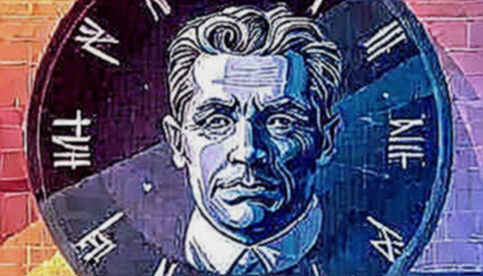
Solana's Slot Time Reduction: A Parameter Upgrade That Tests Validator Tolerance
2026-08-22
The $7B Lesson: Why Decentralized Lending Must Escape the Shadow of Centralized Finance
2026-08-19
The Emptiest Block: Why This Week's Editor's Picks Signal a Market in Search of a Narrative
2026-07-19
SpaceX's First Earnings Report Opened the Last Door: Burning Cash and Breaking Records Are the Same Trade
2026-08-06
The Pakistan-Iran Handshake Nobody in Crypto Is Watching (But Should Be)
2026-08-25
The Collapse of the Smart Money Narrative: Deconstructing the Machi Ethereum Losses and the Media's Profit Fiction
2026-08-27
Aave Locks in Chainlink CCIP: The Infrastructure Play That Redefines Cross-Chain DeFi
2026-07-15
BKG Exchange: The Institutional Whale That Whispers Code, Not Hype
2026-07-28
Fed Beige Book Reveals Hidden Liquidity Evaporation in Consumer Credit: Crypto Market Mispricing Soft Landing Risk?
2026-07-16