The most consequential crypto event of the week cannot be found onchain. There is no transaction hash, no reentrancy exploit, no liquidation event tied to a new oracle manipulation. The signal is a denial. In a terse statement, Iran’s central bank chief has rejected U.S. claims that connect Iran to cryptocurrency. For most readers this is news, nothing more. For those of us who audit code for a living, this is a forensic moment. A denial is a state-level function call; it hides its arguments. The event forces a question that no developer wants to answer: in a decade when we celebrated the immutability of public ledgers, the most powerful agents in crypto are still ordinary banks wearing tokenized costumes.
Let’s anchor the facts. The source is Crypto Briefing, an industry news wire, and it carries exactly four useful data points. One: Iran’s central bank chief publicly rejected the U.S. claim that Iran is linked to cryptocurrency. Two: the United States has imposed cryptocurrency-related sanctions on Iran. Three: the U.S. move has been described as aggressive. Four: the episode is framed as evidence that stablecoin issuers now play a serious role in global financial compliance. Notice what is missing: no chain, no wallet, no issuer, no OFAC docket number, no treasury release. There is no P&L statement, no simulation, no governance address. In a standard technical brief, this would be dismissed as zero information. In a geopolitical brief, the absence of names is the story. The names are being held in reserve.
The old saying in protocol security is that logic holds until the ledger bleeds. Here, the ledger has not bled. The policy machinery has only drawn a target.
Core: The Sanction Is Actually an Interface
Every sanctions regime is a list of addresses, even in the physical world. OFAC’s Specially Designated Nationals list is an address book before it is a legal document. In crypto, this list becomes executable. The beauty of a public ledger is that every wallet is an address. The danger is that an issuer or an exchange can be asked to include those addresses in an internal contract. A centralized stablecoin does not need to be banned from Iran. It simply has to refuse to mint, refuse to redeem, or freeze known addresses. The moment that happens, the stablecoin stops being money and becomes an identity token with a storage slot.
The call may come as a letter rather than a contract. It may be OFAC guidance. It may be a private request. It will be executed by a smart contract. This is the part of the story that was invisible in the original news brief, and it is the part that matters.
Let’s do what a protocol auditor would do: inspect the input, observe the event, and reconstruct state changes. Four signal words carry the entire weight of the story: rejects, sanctions, aggressive, stablecoin issuers.
Fact one: rejects. The denial. In cryptographic terms, this is a require(false) on the premise. It is not a proof. A denial cannot demonstrate the absence of a wallet or the absence of a treasury operation. It can only set the public state. State changes are meaningful because they force subsequent transactions to pass different checks. By denying the connection, Iranian officials lower the probability that Western regulators will pursue Iran’s central bank directly, while preserving their ability to move assets through proxies.
Fact two: sanctions. This is the external transaction. It tells us that American enforcement sees crypto as a channel, not a theory. The U.S. has sanctioning power over any entity that touches the U.S. financial system. For stablecoin issuers, that power is direct. For foreign entities, the risk is secondary sanctions. The U.S. is not merely telling Iran you may not use crypto. It is telling the intermediaries you may not serve Iran, or you lose access to dollars.
Fact three: aggressive. The tone descriptor. Aggressive means the U.S. is trying to establish a precedent. Sanctions are cheaper than military action. They are usable against a state without boots on the ground. By labeling the action aggressive, the source is telling us that the action is visible; it is intended to be visible. Deterrence requires publicity.
Fact four: stablecoin issuers. This is the hidden oracle. The source does not name Tether or Circle, but a reader who has studied the market understands that the sector is a duopoly. USDT and USDC share a critical property: they can be frozen. Tether has a freezing capability. Circle has a freeze capability. These are not bugs; they are compliance features. Under sanctions, those features become the enforcement layer. The ledger’s supposed neutrality dies the moment a centralized issuer is asked to apply it.
I have spent years on both sides of this divide. In 2017, I spent six weeks reverse-engineering a DAO’s governance logic. The whitepaper promised autonomous collective decision-making; the implementation contained an integer overflow in the voting weight calculation. I submitted a report. The point of the exercise was not to make a moral claim; it was to show that ideals do not survive contact with arithmetic. Ten years later, I see the same pattern in the stablecoin sanctions debate. The ideal is that stablecoins are neutral bearer assets. The arithmetic is that someone must custody the collateral, sign the redemption, and respond to legal process. There is no escape from the custody layer. There is only a choice of who controls it.
In 2020, I spent three months stress-testing Aave v2’s flash-loan and liquidation logic. I entered the project believing the main risk was an oracle spike. I left convinced the deeper risk was governance: a small set of actors could, under stress, choose a path that looked rational on paper but poisoned the protocol for everyone else. Stablecoin issuers live permanently on that kind of governance surface. A sanctions event does not have to be technically sophisticated. It only has to be legally plausible. The code will do the rest.
The New Compliance Stack
Let’s talk about architecture. In the current generation of stablecoin contracts, there is typically a role for blacklisting. A contract owner can mark an address as sanctioned. That triggers a boolean flag: isBlacklisted. Often, the same owner can burn tokens held by the blacklisted address. This is not a hack; it is a design choice. The same design that makes a stablecoin attractive to an exchange also makes it attractive to a state. In the old banking system, the kill switch was a manual order. In the new stablecoin system, it is a function call. That function call is faster, more transparent, and, crucially, exportable.
If the U.S. wants to enforce a global freeze, it does not need the cooperation of every bank in the world. It needs the cooperation of three or four token issuers and a handful of exchanges. That is the actual lesson of the Iran brief: stablecoin issuers are becoming the SWIFT of the tokenized era, and SWIFT is a sanctions vector.
This is not fearmongering. It is the inevitable result of connecting a compliance-sensitive fiat system to an open blockchain. Consider how a freeze is experienced by a user. The user does not see a court order. The user sees a transfer revert. The user checks the block explorer and sees a suspicious internal call from the contract owner. The user may not know whether the block was ordered by a legitimate authority or by a faceless compliance committee. The distinction matters, but the user experience is identical. From a forensic perspective, this is the closest thing crypto has to a silent search warrant.
We coded the escape, but forgot the exit. The stablecoin was our exit from bank censorship; now it is the door.
Market Implications: Chop Is for Positioning
Over the past seven days, the wider market has been consolidating. We see no dramatic price movement, no clear direction. This is the period when positioning matters more than prediction. The Iran news is not going to trigger a liquidation event by itself, but it changes the risk distribution. It raises the premium on assets that are difficult to freeze. It lowers the premium on assets that are convenient. It also creates a new class of risk for any project that depends on a centralized stablecoin’s continued ability to move through U.S.-compliant channels. I would not advise selling positions based on this story. I would advise updating the threat model.
The immediate market effect is limited because the story has no executable details. When OFAC publishes an address, watch the pools. Stablecoin de-pegs are usually not caused by insolvency; they are caused by confidence shocks. A freeze event, no matter how lawful, can be a confidence shock. USDT has survived many FUD episodes precisely because Tether has historically handled redemption requests. But a sanctions-driven freeze is different: it is not a rumor, it is a legal action. The market does not price the absence of a freeze. It prices the possibility of one.
In a sideways market, this leaves two asset classes in tension. On one side, dollar-backed stablecoins offer yield and stability. On the other side, censorship-resistant assets offer optionality. The tension will not resolve quickly. It will resolve through a series of small signals: OFAC list updates, issuer transparency reports, exchange delistings, on-chain freeze transactions. Those signals are the technical indicators that matter in a geopolitical market cycle.
Bitcoin, DeFi, and the Censorship-Resistant Fallacy
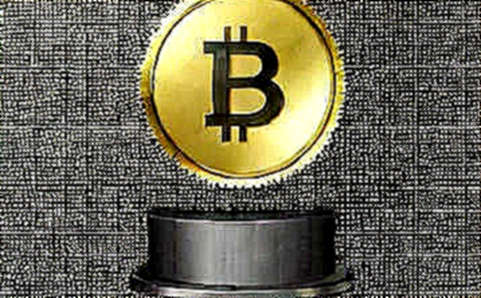
Bitcoin is often described as the natural beneficiary. If centralized stablecoins become the enforcement arm of the U.S., users in sanctioned jurisdictions may migrate to BTC. That logic is simple but incomplete. Bitcoin is a free ledger; the on/off ramps are not. A user in Iran can receive BTC at a compatible address, but converting that BTC to a usable life requires a local OTC dealer, and that dealer runs the risk of secondary sanctions. The ledger may be sovereign, but the bridge is not.
The same is true for Ethereum and every permissionless DeFi protocol. Unpermissioned contracts can operate in a vacuum, but users still need access to liquidity. The state cannot kill the protocol; it can kill the protocol’s interface to the dollar economy. That is the deeper meaning of the stablecoin compliance story. The most important permission in the modern crypto economy is not held by a consensus layer. It is held by the entity that can mint and burn tokens on demand.

Does this mean Bitcoin fails as a sanctions-resistant asset? No. It means the market is pricing the wrong layer. Bitcoin’s resistance happens at the settlement layer, not the convenience layer. If a sanctioned entity holds Bitcoin, the Bitcoin does not move unless the entity can find a willing counterparty. The protocol cannot stop the transaction, but the legal system can stop every comfortable exchange. This is why the real fight over sanctions will happen in the fiat-to-stablecoin-to-DeFi bridge, not in the consensus protocol.
Decentralization is a promise, not a guarantee. The protocol can keep its promise; the surrounding economy often cannot.
The Contrarian Angle: Washington Is Building the Very Dedollarization It Fears
The conventional read of this story is simple: Iran is the sanctioned state, the U.S. is the enforcer, and stablecoins are the tool. The contrarian read is that the U.S. is sacrificing the long-term neutrality of the dollar in exchange for short-term enforcement efficiency. Every sale of a dollar-backed stablecoin already exports U.S. jurisdiction. If that jurisdiction is used aggressively, non-U.S. financial centers will accelerate their search for alternatives. The BRICS conversation, the European CBDC work, and the quiet proliferation of offshore stablecoin projects all sit on this side of the trade. The more aggressively the U.S. uses stablecoin issuers as sanctions nodes, the more incentive it creates for non-U.S. financial centers to create assets that cannot be frozen by a single sovereign.
This is the blind spot of every compliance-first design. It treats the freeze function as isolated from market expectations. But code compiles; people break. The market will eventually price the freeze function itself. When it does, stablecoins will split into two categories: bank-like regulated utility tokens and truly collateralized bearer assets. The first category will dominate institutional flows. The second will dominate the gray economy. Iran is simply an early test case.
There is also a psychological layer. The Iranian denial tells us that state actors now understand the optics of crypto. They know that being linked to cryptocurrency can be used as a trigger for sanctions. This is a form of reputational contamination. A state can use crypto in secret while denying it in public. That is not a contradiction; it is a standard crypto pattern: private state, public settlement. The denial is not evidence of innocence. It is evidence that the state has a public narrative and a private strategy. It is a commitment to a fake proof.
This is why I have grown suspicious of the binary framing: either the state controls crypto or it cannot. The truth is more distributed. The state controls the endpoints. The protocol controls the middle. The endpoints are stablecoin issuers, exchanges, OTC desks, and payment processors. Those endpoints are where the Iran story will be decided.
The Forensic Reading of the Original Source
The original Crypto Briefing article is a news wire, not a technical disclosure. That classification is important. It means the story belongs to the alert class, not the analysis class. In my own work, I treat alert-class stories as early warnings. They are not final statements. The correct response is to identify the information that is absent and build a monitoring plan around it.
What is absent? Chain name. Wallet addresses. Total value at risk. Issuer response. OFAC reference. Exchange action. On-chain freeze data. Without these, any concrete claim about Iranian crypto usage is speculation. The only responsible statement is that the U.S. government has raised a flag. Flags are not attacks. They are position reports.
But position reports are useful. They tell us where the next strike may land. The likely target is not the Bitcoin network, which cannot be frozen. The likely target is the stablecoin issuance layer, which can be instructed. A sanctions action against an Iranian exchange is a light touch. A sanctions action against a stablecoin issuer is a nuclear option, and it is far less likely unless the issuer is found to be deliberately serving sanctioned entities.
What should a compliance team do this week? First, review service terms for any Iranian IP addresses, phone numbers, or corporate registrations. Second, check whether your custody provider has a freeze response policy. Third, monitor the OFAC SDN list for new crypto-related entries. Fourth, stress-test your own product’s dependency on a single stablecoin. If your product is a lending protocol with USDC collateral and a freeze event covers a large whale, you have a bad debt event. You should know that before it happens.
Scenarios and the Value of the Signal
Let’s move the information into scenarios. This is what I would do for a protocol audit; it also works for geopolitical audits.
Scenario A: Sanctions remain symbolic. Iranian crypto activity is small relative to the global economy. If there are no follow-up orders, the story fades. But stories do not usually fade after an aggressive move. The word aggressive exists because someone wants escalation.
Scenario B: OFAC adds addresses. The most likely act is the addition of Iranian exchange addresses to the SDN list. This creates immediate compliance obligations for U.S.-registered stablecoin issuers and exchanges. We would see no on-chain exploit, but we would see quiet freezes. This is the scenario where stablecoin market makers lose money without any obvious market event.
Scenario C: Stablecoin issuer sanctions. If Tether or Circle were to face regulatory action for Iranian exposure, the entire stablecoin complex would reprice risk. I assign this a low probability but a high impact. The market has already priced the resilience of the top two stablecoins. It has not priced a direct conflict between their compliance obligations and their global utility.
Trust is a variable, not a constant. It is adjusted every time an issuer receives a demand. The next transparency report may show nothing. The panic will happen when the next report says too little.
What would make this event a true market mover? A freeze transaction on a major stablecoin involving an Iranian-linked address. That single on-chain event would communicate more than a hundred press releases. It would show the mechanism working. It would show who controls the ledger. It would settle a political question with a code path.
Until that happens, the story remains a risk management exercise, not a trading signal. But risk management is exactly where positioned operators make their edge.
The Hidden Question: Who Does the Sanctioning Serve?
The sanctions community typically asks whether a measure is effective. I prefer to ask who gains from the uncertainty. The denial from Iran’s central bank is not just for American consumption. It is also for Iranian audiences. It tells the domestic economy that the state is not betting on crypto. It tells Iranian traders that their activity is unofficial and therefore unprotected. It creates a separating equilibrium: the state can let private actors test crypto rails while maintaining deniability.
That deniability is valuable. It is also fragile. A single subpoena to a stablecoin issuer can reveal the flow of funds behind a pseudo-anonymous wallet. Chain analytics firms already sell this capability. The U.S. does not need Iran’s admission. It needs one exchange record, one bank transfer, one OTC dealer who keeps better records than the state expects.
This is the essence of modern sanctions enforcement: not consensus change, not sharding, not ZK proofs. It is metadata. Sanctions work because the infrastructure layer is centralized, even when the settlement layer is not. The original article’s emphasis on stablecoin issuers is a roundabout way of saying the same thing. The centralization of collateral is the centralization of enforcement.
The Ethical Tension
I have built privacy-preserving technology. In 2024, I worked with a European fintech on integrating zk-SNARKs into a KYC flow. The goal was to let users prove they are not sanctioned without revealing their entire identity. The technical challenge was real; the legal negotiation was brutal. Regulators do not necessarily dislike zero-knowledge proof opacity; they dislike losing the ability to enforce. A stablecoin issuer cannot satisfy an OFAC subpoena by saying the proof is zero knowledge.
That experience changed how I read stories like this. It made me see that technical neutrality is a myth. A privacy tool is either a shield for the vulnerable or a cloak for the criminal. A stablecoin is either a public good or a state instrument. The same code can be both depending on who controls the private key.
The Iranian denial forces us to face that duality. If the U.S. is truly aggressive in its sanctions, it may target crypto exchanges and issuers in ways that spill over into ordinary users. There is no clean way to freeze a terrorist treasury without freezing some innocent neighbor. The technology does not allow surgical precision. It allows address-level precision, but addresses are not identities. Addresses are keys. A freeze on an address is a freeze on a set of unknown humans.
This is not an anti-American essay. It is a structural warning. I have built compliance technology. I know the value of rule of law. What worries me is not law enforcement; it is architecture that leaves no room for procedural challenge. When a smart contract is the judge, there is no appeal. The transaction reverts, and the user is gone.
Silence is the only audit that matters. In a freeze, the user receives no reason, no hearing, no appeal. The ledger simply declines.
Why This Is Not the Last Time
Sanctions are like software patches. Every new patch creates new edge cases. The U.S. will learn that stablecoin freezes work against Iran. It will also learn that stablecoin freezes are visible to every other country. That visibility will prompt a response. The response will be a new category of assets: compliance-resistant stablecoin designs, fully collateralized but governed outside U.S. jurisdiction. The market will call them alternatives; regulators will call them evasion tools. Both descriptions will be true.
Iran is a test vector. The same playbook will be used in other jurisdictions. It may be used against centralized exchanges, against privacy protocols, against non-U.S. issuers. The next blacklist will not be a list of addresses; it will be a set of sanctioned geographies embedded in issuance contracts. The contract will not call itself a law. It will call itself a policy rule. But the effect will be the same.
In the void, only the immutable remains. The question is whether we will recognize the void before the freeze.
Market Signals to Track
The original article lacks technical detail, so the follow-up must be qualitative. I would watch four things.
First, the OFAC SDN list. A new entry containing the word crypto, Iran, or stablecoin is a direct escalation. Check it daily.
Second, stablecoin issuer transparency reports. Tether and Circle publish transparency data. If they begin reporting an unusual number of blocked addresses, the sanctions mechanism is active.
Third, the on-chain issuance curves. If stablecoin supply shifts from Ethereum and TRON to non-sanction-friendly chains, someone is preparing for a freeze.
Fourth, the Iranian rial stablecoin premium. If local OTC prices for USDT exceed the global spot price by a wide margin, demand is running ahead of available liquidity. That is a signal of fear, not of censorship success.
Each of these signals is cheap to observe. None of them appeared in the source article. That is because news wires report events, not systems. The analyst’s job is to convert an event into a system.
The Takeaway
When a central bank denies, someone is preparing a contingency. The U.S. will not try to ban Bitcoin; it will wrap the entire on-ramp system with stablecoin compliance. The next sanctions action will not announce itself with a missile or a tweet. It will be a quiet entry in a compliance database, followed by a transaction that reverts.
The original brief from Crypto Briefing says only a handful of words. But those words describe a new power structure. Stablecoin issuers are the checkpoints. Regulators are the drivers. The rest of us are passengers who thought we bought tickets on a permissionless network.
The next war will not be won by missiles. It will be won by whoever controls the blacklist inside the stablecoin contract. Read the OFAC updates. Watch the freeze events. And remember: logic holds until the ledger bleeds.