The SEC filing was dry, technical, and buried in the usual regulatory language — until you saw the name: Hanwha Investment & Securities. The Korean conglomerate had just become the largest shareholder of Securitize, the SEC-registered RWA platform, by acquiring a 9.6% stake from existing investors including Blockchain Capital.
For most, this is another institutional checkmark. For me, as someone who has spent years auditing the plumbing behind tokenized assets, this is the first domino in a coordinated effort to reshape how real-world assets are issued, traded, and settled in Asia. Hanwha didn’t just buy Securitize shares; they simultaneously injected capital into Xangle (blockchain data), Kresus (Web3 wallet infrastructure), Digital Asset (Canton Network), and raised their stake in Dunamu, the parent company of Upbit, South Korea’s largest exchange. The total bill: 580 billion won (approx. $436M), with the Dunamu portion alone at 597.8 billion won (approx. $450M).
Let’s break down what this actually means at the code and ecosystem level — because the narrative of “institutional adoption” often masks the underlying technical and governance shifts.
Context: The Architecture of a Closed-Loop RWA Pipeline
Securitize is not a typical DeFi protocol. It is a regulated broker-dealer and transfer agent that tokenizes real-world securities — real estate, private credit, even funds. Its smart contracts are designed for compliance: whitelisted addresses, KYC/AML verification at the protocol layer, and integration with traditional custody. Hanwha, through its securities arm, now sits on the board of this platform.
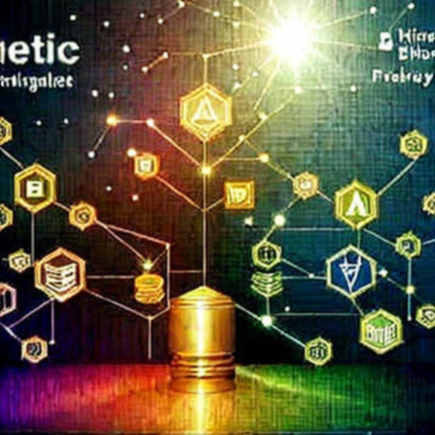
But the real insight is the vertical integration. Hanwha also owns a piece of Digital Asset, whose Canton Network is built for institutional asset settlement — think DvP (delivery vs payment) for tokenized bonds. They control data flow through Xangle, which provides token analytics and compliance reporting. And they have a direct line to retail liquidity via Upbit. This is not a collection of passive investments; it’s a modular, stack-level strategy. From issuance (Securitize) to trading (Upbit) to infrastructure (Canton, Kresus, Xangle), Hanwha can now offer a full lifecycle for tokenized RWA in Korea.
Core: Where the Code Meets the Capital
As a smart contract architect, I focus on the two most fragile parts of any RWA system: the minting logic and the oracle price feeds. Securitize’s contracts use a multi-sig controlled by the company — standard for regulated entities. But the real novelty here is the compliance layer: each token reflects a legal agreement, and the smart contract enforces transfer restrictions based on accredited investor status. Hanwha’s involvement means this compliance model could be adapted for Korean securities law, which has a separate set of STO (Security Token Offering) regulations under the Financial Investment Services and Capital Markets Act.
Based on my audit experience with similar structures, the biggest risk is not the code itself, but the oracle dependency. RWA tokens need real-time off-chain data — property valuations, interest payments, custody confirmations. Securitize uses a combination of legal confirmations (not on-chain oracles) to update token metadata. That works for monthly dividends, but breaks down for secondary trading. If Upbit wants to list a Securitize token that trades 24/7, the market price will decouple from the underlying asset’s net asset value within hours — a phenomenon I’ve seen repeatedly in liquid real estate tokens. Hanwha’s investment in Xangle might solve this: they could build a dedicated price oracle for Korean RWA assets, using Xangle’s data aggregation.
The contrarian angle here is not about technical security, but governance centralization. Hanwha now controls the issuance platform, the exchange, and the data infrastructure. That creates a single point of failure — not at the code level, but at the trust level. “Code is law, but trust is the currency,” as I often say. If Hanwha decides to delist a token, blacklist an address, or alter compliance rules, there is no escape valve. The ecosystem becomes a walled garden controlled by one conglomerate. This is exactly the opposite of what decentralization advocates want, but it’s exactly what institutional capital demands: a trusted intermediary.
Contrarian: The Blind Spot of Institutional “Decentralization”
Many will cheer this as mainstream adoption. I’m more cautious. Hanwha’s move mirrors the structure of a traditional financial holding company, but with blockchain as the back end. The transparency is improved (you can see token movements on-chain), but control is consolidated. For a retail user in Seoul, “buying a tokenized real estate fund on Upbit” will feel like buying a normal stock on the Korea Exchange — except the settlement could be faster. But the underlying asset is still managed by a centralized entity that can freeze or modify the token metadata. The smart contract may be immutable, but the legal wrapper is not.
Audit the intent, not just the syntax. The intent here is clear: Hanwha wants to be the dominant RWA infrastructure provider in Korea. They will likely push for regulatory sandbox approval to issue the first tokenized securities under the new STO framework, using Securitize’s compliant contracts combined with Upbit’s distribution. That’s a legitimate business strategy, but it also means the ecosystem’s resilience depends on Hanwha’s internal governance. If a conflict arises between Hanwha’s securities division and Upbit’s exchange, who arbitrates? There is no DAO, no on-chain governance — just traditional shareholder meetings.
Takeaway: The Fork in the Road for RWA
The next 12 months will define whether RWA tokenization becomes a truly open market or a private consortium of licensed players. Hanwha’s stack is impressive, but it lacks composability. Can a third-party developer build a DeFi lending protocol on top of Securitize tokens without Hanwha’s permission? Currently, no — because the compliance layer requires whitelisting. The industry needs to answer a fundamental question: will tokenization lower barriers to asset access, or just digitize the same gatekeeping structures?
⚠️ Deep article forbidden Code is law, but trust is the currency. Audit the intent, not just the syntax. Tech Diver