On August 8, 2024, JD Vance told media that US–Iran negotiations had recorded "some progress in recent days." The timestamp matters: 89 days to a US presidential election, three weeks after Pezeshkian's inauguration in Tehran, and a few days after the region's latest escalation cooled. Commodity desks read the headline as oil — a signal that the Strait of Hormuz, conduit for roughly 20% of the world's crude and a quarter of its LNG, may ease. Futures softened accordingly. That is the first-order trade.

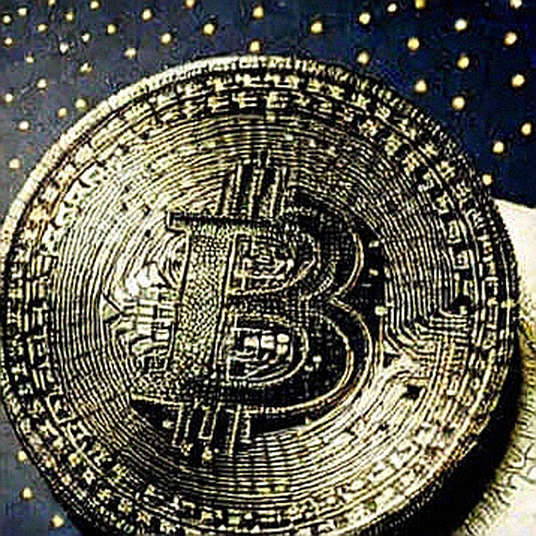
The second-order trade runs through Bitcoin. Iran is not merely a sanctioned petrostate. It is a top-tier crypto mining jurisdiction, converting subsidized electricity into the one global asset that requires no correspondent bank, no letter of credit, and no compliant insurance chain. A negotiation that relaxes oil sanctions reallocates Iranian energy from hash rate to barrels overnight. "Some progress" is therefore a two-derivative statement: a call on crude, and a call on hash rate migration. The desks monitoring war-risk premiums are reading last month's data. The live signal is on the chain.
Context
Peel the diplomatic wrapper. Vance's statement is a campaign artifact built from two demands disguised as offers. The first: Iran should commit to "not firing on ships" — a direct constraint on the IRGC Navy's asymmetric toolkit of fast boats, anti-ship cruise missiles, mines, and shore-based ballistic missiles inside the Strait. The second: "maximize oil and gas production" through Hormuz. The phrase is deliberately ambiguous — meaning either Iran's own output or total transit volume. The two readings imply opposite policies toward OPEC+.
The macro anchor is the barrel count. Iran currently exports around 1.3–1.5 million barrels per day through gray channels, almost all directed to Chinese independent refiners through a shadow fleet that transits with spoofed AIS and uninsured cargoes. Full normalization could lift exports above 4 million barrels per day — a swing equal to roughly 3–4% of global supply. That is the payload for oil markets.

The production-maximization phrase deserves its own audit. Treated literally, Iran adding 2.5–3 million barrels of daily export capacity would break the OPEC+ supply discipline, forcing Saudi Arabia to absorb disproportionate cuts or defend market share against a resurgent Tehran. The ambiguity is therefore functional: Washington can tell Riyadh one thing and Tehran another while retaining deniability. The same logic governs the "no firing on ships" wording, which arrives without a verification mechanism, a timeline, or an escalation clause. In my experience auditing loan protocols, this is the "market-neutral" clause that turns out to be directionally loaded.
The crypto payload is quieter. Iran legalized Bitcoin mining in 2019, and under compounding sanctions, mining became the country's only monetizable energy export that ignores shipping lanes, insurance lists, and settlement networks entirely. When the US Treasury chokes oil money transfers, hash is the residual channel. When it doesn't, mining load reallocates.

The election window converts every diplomatic gesture into a gamma position. A team that can suppress oil prices into November reduces the Fed's burden, loosens inflation constraints, and reshapes risk-asset liquidity expectations. This negotiation is a synthetic rate cut wearing diplomatic clothes — and its second derivative lands directly on crypto volatility.
Core
The settlement rail is the enforcement surface.
In my audits, I open the admin-key file first. For the Iranian sanctions regime, the equivalent is the payment corridor. The architecture — OFAC designations, SWIFT disconnection since 2012, secondary sanctions against any Western clearing bank — means a barrel of oil priced at $80 requires roughly $116 billion per year of settlement infrastructure that cannot exist on the official ledger. That void has a filling: USDT on Tron. Chain-analytics firms have mapped clusters of high-risk wallets tied to Iranian petroleum intermediaries. The US Treasury has acted on that mapping, naming brokers and their associated addresses. The pipeline runs: sanctioned barrels, shadow tankers, stablecoin conversion at Dubai and Istanbul OTC desks, then into deeper liquidity.
Tether and Circle maintain voluntary address-freezing programs coordinated with law enforcement. Once designated, a wallet becomes radioactive: the entire cluster stops transacting out of fear of contagion. That is a protocol-level deterrent that predates any treaty and outlasts any presidency. It is also why Washington does not need Iran to promise anything about payment rails; the rails already enforce soft policy. What the negotiation changes is the volume of barrels assigned to those rails.
This means the negotiation cannot hide. If Vance's progress is real, the velocity of stablecoin supply into high-risk clusters should decelerate within a quarter as barrels reroute into licensed, but monitored, channels. If it is theater, the flows persist. Volume without velocity is just noise in a vacuum — the ledger distinguishes the durable from the performative. The market has priced the headline; it has not priced the flow.
The verification gap is a reentrancy bug.
The central promise — "no firing on ships" — fails the first-principles test. In every DeFi audit I have run, the critical question is whether the admin key holder's incentives align with the protocol's stated policy. Here they do not. The IRGC's naval forces answer to the Supreme Leader, not to the Foreign Ministry or to the reformist president who carries the negotiation's public face. Iran signals commitment from a principal who cannot guarantee the behavior of the agent that matters. A unilateral promise without an independent verification oracle is a reentrancy vulnerability waiting for a trigger: the moment a tanker in the Strait perceives hostility, the contract is re-entered and the commitment collapses.
Off-chain, the US compensates with ISR dominance — reconnaissance aircraft and carrier group presence. On-chain, it has a cleaner instrument: the stablecoin rails are legible. Authenticity cannot be hashed; it must be proven — but payment flows can be hashed, and that traceability is the enforcement surface the US Treasury has already demonstrated it will use.
Iranian mining is a call option on the sanctions regime.
Quantifying the mining asymmetry: Iranian industrial power tariffs, particularly from subsidized sources, run far below global benchmarks. At those rates, even prior-generation ASICs generate exceptional nominal margins. But the realized margin hangs on externalities: the OTC discount on proceeds, the counterparty risk of the broker, the seizure probability embedded in every wallet-to-exchange hop. Sanctions-mining is a leveraged position on regime persistence and enforcement indifference.
Apply the negotiation to that cost structure. If Iran gets oil relief, barrels become the superior asset: they yield hard currency, diplomatic legitimacy, and supply-chain re-entry. The national economic planner reallocates energy away from proof-of-work and toward waterline cargo. Mining load idles. If talks collapse, mining remains the monetization rail of last resort, and the hash rises. Iranian network share is a forward market on diplomatic outcomes — tradable, if you know where to look.
The cleanest read: Iran's mining load is the canary. It cannot be spun in a press release, and it reacts to diplomatic signals faster than tanker traffic does, because miners reallocate at the speed of a coinbase transaction. Watch it.
The other edge: "maximize production" is a global headwind for every miner, not just Tehran's. More Iranian barrels means lower world prices, which compresses power prices for a time and squeezes marginal miners across Texas and Kazakhstan alike. Gravity always wins against leverage — and oil supply is gravity.
The election transmission is the hidden liquidity event.
Trump and Vance have both signaled a pro-crypto posture, with the candidate addressing the Nashville conference weeks earlier. The Iran negotiation should be read inside that framework: a successful arrangement removes the political cost of easing crypto-related sanctions enforcement and reframes digital asset rails as instruments of energy security rather than evasion vectors. The strategic prize is the swing-state gasoline price; the derivative prize is a Treasury that treats chain analytics as a deterrent tool rather than a confiscation mandate.
Contrarian
The reflexive take is that de-escalation kills the crypto sanctions trade. That misses the structural layer, which is where I prefer to operate. A genuinely normalized Iran cannot settle 4 million barrels a day through legacy plumbing; the banking system is neither fast nor politically neutral enough to absorb that volume within an election cycle. The precedent is Venezuela's temporary general license window, where stablecoin corridors shouldered payment flows that Western banks refused to touch — and the infrastructure persists after the license lapsed. Scaling Iran would institutionalize those corridors, converting a gray-market settlement rail into a regulated pathway between OFAC-scrutinized counterparties. That is crypto adoption by plumbing failure, not ideology.
The bulls are also correct on the risk-premium leg. A verifiable Iran deal kills the tail of a Hormuz closure, collapses war-risk insurance spreads, and strips the geopolitical premium that has quietly re-rated risk assets all year. Lower tail risk means repricing: the hedge that capital parked in Bitcoin during April's missile exchange unwinds, but the liquidity released flows back into structurally sound assets. The question bulls must answer honestly is whether the deal is real and verifiable. If it is theater — and the on-chain flow data will say so — the risk premium was only deferred, not deleted.
Takeaway
Watch the clusters, the hash, and the enforcement posture. Not the press conference. If the progress is authentic, stablecoin flows to high-risk Iranian intermediaries decelerate within one quarter as barrels re-enter monitored channels. If it is performance, the flows accumulate invisible leverage beneath a calm surface. We do not fear the hack; we fear the ignorance — and the cure is staring at the ledger until the theater and the truth separate.