The news hit my terminal like a cold splash of reality: China's central bank bought 40 tonnes of gold in June, the second-largest monthly purchase since early 2025. The source was Crypto Briefing, not Bloomberg or Reuters, so I took a breath and sharpened my skepticism. But the signal, even from a secondary outlet, was unmistakable. While the crypto world obsesses over the next L2 airdrop or the latest AI-agent token, the People's Bank of China is quietly executing a strategy that speaks to the very foundation of value itself. This isn't just a macro headline; it's a lesson in protocol design, risk management, and the eternal search for a settlement layer that no single nation can freeze, fork, or censor.
From my years auditing DeFi protocols and watching governance systems fail, I've learned that the most important signals are often the quietest. A 40-tonne purchase is not a market-moving event in the context of a $15 trillion gold market. But it is a profound statement of intent. It's the equivalent of a whale moving funds into a cold wallet—not for trading, but for custody. The question isn't whether this moves the price today; it's what it tells us about the next decade of monetary architecture. And for those of us building in the decentralized space, the implications are more relevant than most realize.
Let's strip away the noise and look at the balance sheet. China holds over $3.2 trillion in foreign exchange reserves, the largest war chest on the planet. Yet gold represents only about 5% of that total, compared to a global average of roughly 15% for major central banks. This gap is not an oversight; it's a trajectory. The PBOC is not buying gold because it's bullish on the shiny metal. It's buying gold because it's bearish on the reliability of the dollar as a neutral reserve asset. This is the ultimate 'de-risking' trade, executed at the sovereign level.
The context here is critical. Since 2022, when the US froze over $300 billion in Russian central bank assets, the implicit social contract of the global financial system was broken. The dollar was no longer just a currency; it became a geopolitical weapon. Every nation holding significant dollar reserves suddenly faced a new form of 'smart contract risk'—the risk that the terms of the contract could be unilaterally rewritten by the issuer. In the crypto world, we call this 'admin keys.' The US Treasury, in effect, holds the admin keys to the global financial system. And China, like many others, has decided to revoke those permissions.
This is where my experience as a protocol PM kicks in. When I audit a DeFi protocol, I look for points of centralization. Who can pause the contract? Who can upgrade the logic? Who holds the multi-sig? The same framework applies to nation-states. The PBOC is essentially performing a governance audit on the dollar-based system and finding it too risky. Gold, in this analogy, is the ultimate immutable, non-upgradeable asset. It has no admin keys. It cannot be frozen. It cannot be inflated away by a policy decision. It is the original 'code is law' asset, with a provenance that spans millennia.
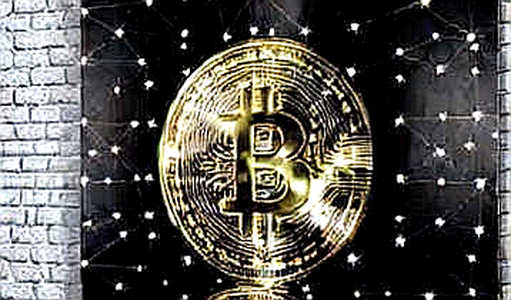
But let's be contrarian for a moment. The crypto maximalist in me wants to say, 'Why gold? Why not Bitcoin?' The answer is liquidity, scale, and political palatability. China cannot buy $100 billion in Bitcoin without moving the market and triggering a domestic crackdown on capital flight. Gold, on the other hand, is a traditional reserve asset that fits within the existing framework of the IMF and BIS. It's a conservative move, not a revolutionary one. The PBOC is not trying to build the future; it's trying to hedge against a specific tail risk: the weaponization of the dollar.
This brings me to the core insight that most macro analysts miss. The gold purchase is not a signal about inflation or interest rates. It's a signal about the fragmentation of the global monetary order. We are moving from a unipolar system, where the dollar is the default settlement layer, to a multipolar system with multiple, competing ledgers. The rise of CIPS (China's cross-border payment system), the growth of bilateral swap lines, and the accumulation of gold are all part of the same trend. They are building a parallel financial infrastructure that can operate independently of the US-centric SWIFT system.
For the crypto industry, this is both a warning and an opportunity. The warning is that 'decentralization' is not just a technical feature; it's a geopolitical necessity. The opportunity is that the same forces driving central banks to gold are driving institutions to explore tokenized assets, stablecoins, and permissionless networks. The demand for assets that are 'outside the firewall' of any single jurisdiction is not a niche interest; it's becoming a sovereign imperative. We are seeing the early stages of a convergence between the traditional world of gold reserves and the digital world of blockchain-based value transfer.
Let me give you a concrete example from my own work. I recently consulted with a European fintech firm on how to structure a custody solution for tokenized real-world assets. The conversation inevitably turned to the question of 'jurisdictional risk.' Where do we store the private keys? What happens if the EU imposes capital controls? What if the US sanctions the issuer? These are not hypothetical questions anymore. They are the same questions that central banks are asking about their dollar reserves. The answer, for both the fintech firm and the PBOC, is the same: diversify into assets that are not subject to unilateral seizure.
This is why I believe the gold purchase is a more significant signal for the crypto market than most people realize. It validates the core thesis of Bitcoin and other decentralized assets: that trust in centralized institutions is a depreciating asset. When the world's largest central bank is actively reducing its exposure to the world's reserve currency, it's a tacit admission that the current system is broken. The code is cold, but the community is warm. And the community of nation-states is voting with their balance sheets.
Now, let's address the elephant in the room: the scale of the purchase. Forty tonnes is a lot of gold, but it's not a game-changer in terms of market impact. The daily trading volume in the gold market is around $150 billion. A $3 billion purchase is a drop in the bucket. The impact is not in the size; it's in the signal. The signal is that the PBOC is committed to a long-term trend of reserve diversification. This is not a one-off trade; it's a strategic reallocation that will likely continue for years. The World Gold Council estimates that central banks have bought over 1,000 tonnes of gold annually since 2022. China is a major contributor to that trend, and there's no sign of it stopping.
This brings me to a contrarian angle that I think is often overlooked. The crypto market tends to view gold as a 'legacy' asset, a relic of the pre-digital age. But gold is actually the most successful decentralized protocol in history. It has no founder, no foundation, no governance token. It has survived empires, wars, and technological revolutions. It has maintained its value for over 5,000 years without a single software upgrade. In a world where we're constantly chasing the next innovation, there's a lesson in the durability of simple, immutable systems. The PBOC understands this. They're not buying gold because they're old-fashioned; they're buying it because it's the most battle-tested store of value in existence.
From a technical perspective, I see a direct parallel between the PBOC's gold strategy and the design of robust DeFi protocols. The key principle is redundancy. A well-designed protocol doesn't rely on a single oracle, a single bridge, or a single collateral type. It diversifies its risk across multiple, uncorrelated sources. The PBOC is doing the same thing with its reserves. It's reducing its reliance on a single issuer (the US Treasury) and diversifying into an asset (gold) that has no counterparty risk. This is the essence of 'hydraulic stability'—the ability to maintain equilibrium under pressure by distributing risk across multiple channels.
But here's where I have to challenge my own industry. The crypto space often talks about 'trustless' systems, but we're still heavily reliant on centralized infrastructure. Stablecoins like USDC and USDT are backed by US Treasuries, which means they carry the same geopolitical risk as the dollar itself. If the US were to freeze the assets of a major stablecoin issuer, the entire DeFi ecosystem would face a liquidity crisis. The PBOC's gold purchase is a reminder that true resilience requires assets that are not just 'decentralized' in name, but in substance. We need to build systems that can survive the failure of any single nation-state, not just any single protocol.
This is the 'information gain' I want to offer in this article. The macro narrative around gold is not just about inflation or interest rates. It's about the fundamental architecture of trust in the 21st century. The PBOC is making a bet that the future is multipolar, that no single currency will dominate global trade, and that assets with no issuer will become increasingly valuable. This is a bet that aligns with the core ethos of the crypto movement. We are not just building alternative financial systems; we are building alternative trust frameworks. And the central banks are, in their own way, doing the same thing.
Let me give you a practical example of how this plays out in my daily work. I'm currently co-leading a project to create verifiable AI training datasets on-chain. The challenge is ensuring that the data is authentic, tamper-proof, and owned by the contributors. We're using zero-knowledge proofs to verify the integrity of the data without revealing its contents. This is a microcosm of the same problem that central banks face with their reserves. How do you verify the value of an asset without relying on a trusted third party? The answer, in both cases, is cryptographic proof. For gold, the proof is physical. For digital assets, the proof is mathematical. But the underlying principle is the same: trust, but verify.
The PBOC's gold purchase is a form of verification. It's a statement that the dollar's promise to maintain its value is not sufficient. It's a demand for a more tangible form of assurance. And this demand is not coming from a fringe group of crypto anarchists; it's coming from the world's second-largest economy. This is the 'institutional compliance synthesis' that I've been writing about for years. The adoption of decentralized principles is not just happening at the grassroots level; it's happening at the highest levels of global finance. The language may be different, but the logic is the same.
Now, let's talk about the risks. The most obvious risk is that the gold purchase is misinterpreted as a sign of weakness. If the market reads this as a signal that China is preparing for a currency crisis or a military conflict, it could trigger capital flight and put downward pressure on the yuan. This is a real concern, but I think it's overblown. The PBOC is not buying gold because it's panicking; it's buying gold because it's planning. It's a long-term strategic move, not a short-term reaction. The market will eventually understand this, but in the meantime, there could be volatility.
Another risk is that the gold price itself becomes a bubble. If central bank buying continues at this pace, and retail investors pile in, we could see gold prices detach from their fundamental value. This would be bad for the PBOC, as it would increase the cost of future purchases and reduce the real value of their reserves. But this is a risk that the PBOC is willing to take. They're not buying gold for the short-term return; they're buying it for the long-term insurance. And in the world of sovereign finance, insurance is worth paying a premium for.
There's also the risk of a 'digital gold' alternative. If Bitcoin or another cryptocurrency were to achieve the same level of institutional acceptance as gold, it could potentially replace gold as the preferred reserve asset. But this is unlikely in the near term. Central banks are conservative institutions. They're not going to put their reserves into a volatile, unregulated asset class. Gold has a 5,000-year track record; Bitcoin has a 15-year track record. For a central bank, that's not even a rounding error. The PBOC is not going to be the first mover on Bitcoin reserves. They'll let smaller, more agile nations test the waters first.
This brings me to my final point, which is about the future of money. We are witnessing a fundamental shift in the way value is stored and transferred. The old system, based on the dollar and the gold standard, is giving way to a more complex, multipolar system. In this new system, there will be room for multiple assets: gold, digital currencies, tokenized real-world assets, and perhaps even new forms of synthetic value. The key will be interoperability. Just as the internet connected different networks, the future of finance will connect different ledgers. The PBOC's gold purchase is a reminder that the most important ledger of all is the one that records trust itself.
As I write this, I'm reminded of a conversation I had with a colleague at a conference in Rome. We were discussing the future of DeFi, and he said, 'The code is cold, but the community is warm.' I've never forgotten that. It captures the essence of what we're trying to build. We're not just building protocols; we're building communities of trust. And the PBOC, in its own way, is doing the same thing. It's building a community of trust with other central banks, with gold as the common language. It's a reminder that the principles of decentralization are not just about technology; they're about human nature. We all want to be part of a system that we can trust, a system that won't let us down.
The takeaway from this analysis is not that you should go out and buy gold, or that you should sell your crypto. The takeaway is that the world is changing, and the institutions that we thought were permanent are proving to be more fragile than we imagined. The PBOC's gold purchase is a hedge against that fragility. It's a bet on the long-term value of assets that are not controlled by any single entity. And in that sense, it's a bet on the future of decentralization. We are not just users; we are the protocol. And the protocol is evolving.
So, what should we do with this information? We should build. We should build systems that are more resilient, more transparent, and more inclusive. We should build bridges between the traditional world of gold and the digital world of blockchain. We should build the infrastructure for a multipolar financial system that can serve the needs of a diverse and interconnected world. The PBOC is showing us the way, not by embracing crypto, but by embracing the principles that make crypto valuable: immutability, transparency, and independence. The code is cold, but the community is warm. And the community is growing.
In the end, the 40 tonnes of gold is not just a number. It's a signal. It's a signal that the era of unipolar financial dominance is over. It's a signal that the future belongs to those who can adapt, diversify, and build systems that can withstand the test of time. It's a signal that the principles of decentralization are not just a niche interest; they are a global necessity. And it's a signal that we, as builders, have a responsibility to create a better future. Chaos is just order waiting to be optimized. And the order we build today will determine the stability of tomorrow. From hype cycles to hydraulic stability, the journey is just beginning.