The numbers don't move. That's always the first red flag.
Oil sits flat. West Texas Intermediate barely twitches. Brent crude holds its range. Yet the Strait of Hormuz—the conduit for 21 million barrels of crude per day, one-third of the world's seaborne oil—is quietly decelerating. Insurance premiums on tankers transiting the Persian Gulf have climbed. Shipping schedules are slipping. The US-Iran talks have stalled, and the market's response is... nothing.
That non-response is the most dangerous signal in the room. It tells me that the market has priced in a narrative of "manageable tension"—a repeated cycle of brinkmanship followed by de-escalation. But the underlying mechanics of this particular standoff are different. And the difference has everything to do with a concept that my audit work has taught me to recognize immediately: gray zone exploitation.
Let me explain why this matters for anyone holding crypto, auditing DeFi protocols, or building on-chain infrastructure.
Context: The Strait as a Protocol
Think of the Strait of Hormuz as a critical shared state variable in a global settlement layer. Its width—33 kilometers at its narrowest point—places it within the effective range of Iranian anti-ship missiles, drone swarms, and naval mines. This geographic constraint creates a fundamental asymmetry. The US Fifth Fleet, with its carrier strike groups and nuclear submarines, dominates the open ocean. But in the Strait, the defender's advantage is overwhelming. The cost of projecting force through that narrow corridor is orders of magnitude higher than the cost of denying passage.
This is not a new observation. The 1980-88 Tanker War, the 2019 seizure of the Stena Impero, the 2024 shadow fleet maneuvers—all fit the same pattern. But the current phase has evolved into a third generation of coercion. The first generation was physical blockade. The second was harassment and seizure. The third generation is what we see now: a purely narrative-driven, insurance-market-mediated pressure campaign that requires no explicit hostile action.
Core: The Oracle Problem of Global Shipping
Here is where my background as a DeFi security auditor forces me to pay attention. The mechanism by which Iran exerts pressure in this third generation is functionally identical to a price oracle manipulation attack.
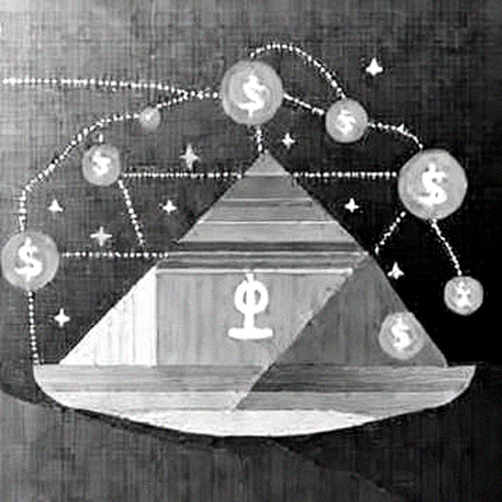
Consider: Iran does not need to fire a missile. It does not need to board a tanker. It only needs to create enough uncertainty about the safety of passage that the market's risk-pricing machinery—Lloyd's underwriters, ship owners' risk committees, charterers' legal teams—autonomously raises the cost of doing business. The insurance market acts as a decentralized oracle. It aggregates signals: geopolitical statements, naval postures, historical incident data, and, crucially, the absence of explicit denials. When Iran lets a negotiation stall, it feeds a negative signal into that oracle. When shipping companies see that signal, they raise premiums, reroute vessels, or delay voyages. The Strait slows down. Oil supply tightens. Prices rise.
Iran gains the economic benefit of a blockade without incurring the legal or military cost of one. It is a textbook oracle manipulation: the attacker influences the data feed that the settlement layer—the global oil market—relies on, without ever touching the underlying asset.
This is precisely the pattern I identified in the 2020 bZx flash loan exploit. The attacker didn't break the protocol's core logic. They manipulated the price feed from Uniswap and Kyber, causing the lending contract to mispricing collateral, and extracted millions in value. The mechanics are identical: the trick is not to attack the asset, but to attack the information infrastructure that prices the asset.
In the case of Hormuz, the information infrastructure is the insurance market, the shipping schedules, the diplomatic posture. And the attack vector is "strategic ambiguity." Iran keeps the threat level high enough to trigger risk premiums, but low enough to avoid overt escalation. The market's own pricing mechanism does the rest.
Contrarian: The Blind Spot of 'Strategic Patience'
The conventional wisdom among oil traders is that this is a repeat of the 2019-2020 cycle: bluff, counter-bluff, eventual de-escalation. I think that is a dangerous heuristic. The key difference is that the US has less strategic patience than it did five years ago.
Since 2024, the US has been actively reducing its military footprint in the Middle East to focus on the Indo-Pacific. The 2025 withdrawal of two carrier strike groups from the Fifth Fleet's area of responsibility was a signal of intent. Iran reads that signal. The stalled talks are not just a negotiation tactic; they are a test of US commitment. If the US reacts to the shipping slowdown by releasing strategic petroleum reserves—a non-military response—Iran learns that the cost of applying pressure is low. It will apply more.
This is the same blind spot I see in DeFi protocols that rely on a single oracle. The operator assumes the oracle is neutral. But every oracle has an incentive alignment problem. In the case of US-Iran, the US has an incentive to project calm (to keep oil prices down pre-election), and Iran has an incentive to project risk (to gain leverage). The market's price oracle is being pulled in two directions. The result is a stalemate that masks accumulating risk.
Trust is not a variable you can optimize away. The oil market's trust in the narrative of "manageable tension" is the very thing that makes a sudden spike possible. The longer the calm, the more vulnerable the system is to a single data point—a tanker incident, a diplomatic meltdown, a military skirmish—that flips the oracle's output.
Takeaway: The Cryptocurrency Connection
What does this mean for crypto? Directly, Bitcoin and Ethereum have shown correlation with geopolitical risk events in 2024-2026. The 2024 Iranian attack on Israeli consulate in Damascus triggered a 12% Bitcoin rally within 48 hours as traders fled to digital gold. The current setup is similar: a slow-burn geopolitical risk that is not yet priced into traditional markets, but could catalyze a sudden re-rating.
But more importantly, the Hormuz case is a live demonstration of a systemic vulnerability that every DeFi builder should study. The attack surface is not the code. It is the shared state variable that the code depends on. In DeFi, that shared state is the oracle. In the global oil market, it is the Strait of Hormuz. Both are bottlenecked, both are trust-dependent, and both are being gamed by actors who understand that the most effective way to manipulate a system is to manipulate its inputs.
I have spent the past decade auditing protocols that fail to account for oracle manipulation. The fixes are always the same: redundant feeds, time-weighted average prices, circuit breakers, and above all, a clear-eyed assessment of who controls the data. The oil market has none of these. It relies on a single geographic bottleneck, a single insurance market, and a single diplomatic channel. That is a system waiting to be exploited.
The next time you see a market that looks calm despite a known risk, ask yourself: is the oracle being manipulated?