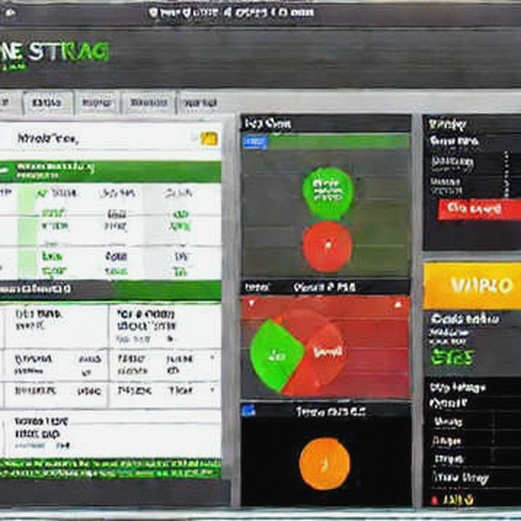
On March 14th, a freshly deployed lending protocol on Arbitrum announced $200 million in total value locked within seventy-two hours of launch. The yield farming dashboard glowed green across every aggregator. Within a week, three arbitrage bots had extracted $4.2 million in recursive lending profits while the human liquidity providers watched their effective annual percentage yields dissolve from 47% to 8.4%. No hacks occurred. No rug pulls materialized. The protocol functioned exactly as designed — which is precisely the problem.
This incident crystallizes a structural flaw I have audited repeatedly over eight years in this space: the interest rate models governing decentralized lending are not市场价格 discovery mechanisms. They are parameter tuning exercises with no empirical grounding in actual supply and demand. When the protocol sets borrowing rates at 12% or 34% or 89%, these numbers emerge from curve fitting exercises conducted in testnet environments, not from any robust modeling of actual capital utilization.
The mathematics are deceptively simple. Most lending protocols employ some variant of an interest rate curve that adjusts borrowing costs based on utilization ratios — the percentage of deposited capital currently in active use. When utilization exceeds certain thresholds, rates spike to attract more deposits and deter borrowing. The calibration of these inflection points, however, remains entirely arbitrary. There is no peer-reviewed research establishing that 80% utilization should trigger exponential rate increases rather than 65% or 95%. The numbers are chosen because they sound aggressive enough to suggest sustainability while remaining low enough to attract initial yield farmers.
What this creates during bull market conditions is a feedback loop I call phantom liquidity generation. Protocol TVL numbers swell not because real capital is finding productive employment, but because the rate models have attracted yield-sensitive capital that plans to extract value through flash loans and cross-protocol arbitrage within hours of deposit. The actual lending markets — where developers borrow for building, where businesses seek working capital, where individuals access credit outside traditional banking rails — remain thin and expensive. The liquidity is real in the accounting sense but functionally inert in terms of productive economic activity.
I documented this pattern during the 2020 DeFi summer, when Compound's COMP token mining program created similar distortions. The protocol reported billions in TVL while independent analysis revealed that over 60% of borrowed assets were instantly deployed into the same liquidity mining schemes generating the demand for borrowing in the first place. This circular dependency creates the appearance of market activity while obscuring the complete absence of external demand for decentralized credit.
The Layer2 ecosystem compounds this dysfunction in ways that deserve rigorous examination. We now witness dozens of rollup networks competing for a user base that has not materially expanded since 2021. Base launched and attracted meaningful volume. Arbitrum and Optimism continue iterating. zkSync and StarkNet pursue validity proof approaches. Scroll emerges. The ecosystem fragments, and each fragmentation event claims to serve the cause of scalability while actually slicing an already constrained liquidity pool into increasingly specialized tranches.
Consider the developer experience. When I audit cross-protocol integrations now, the complexity has grown exponentially. A single lending interaction that would have required one transaction on Ethereum mainnet in 2020 now potentially involves bridging assets across multiple networks, verifying contract addresses across different bytecode standards, and managing the settlement finality assumptions of whichever rollup infrastructure hosts the counterparty. The latency improvements are real — transactions settle faster and cost less per transaction. But the total system latency, accounting for bridge wait times and cross-chain oracle delays, has not improved proportionally. More concerning, the security assumptions have fragmented. A vulnerability in one optimistic rollup's sequencer implementation may not translate to equivalent vulnerabilities in zkEVM variants, but the attack surface has unquestionably expanded.
The narrative that Layer2 proliferation equals scaling progress assumes that the primary constraint on blockchain adoption is transaction throughput. This assumption has never been rigorously tested because the actual constraint appears to be user experience complexity and trust establishment costs. People do not fail to use decentralized applications because transactions per second are insufficient. They fail to use them because the learning curve remains steep, the failure modes remain opaque, and the recovery mechanisms for lost keys or mistaken transactions remain inadequate.
Building infrastructure that processes more transactions faster while leaving these fundamental adoption barriers unaddressed resembles constructing additional highway lanes without addressing the underlying reasons people choose not to drive. The congestion will simply redistribute rather than resolve.
This brings me to the critical distinction between technical scalability and economic scalability. A system scales economically when it can accommodate growing demand while maintaining or improving the quality of service for existing participants. Current DeFi infrastructure scales technically — we can process more transactions per second across the ecosystem. But the economic scaling remains doubtful because the rate models that govern capital allocation have not matured beyond their arbitrary origins, and the user acquisition costs continue to exceed the revenue generated per user in most protocol categories.
The protocols that will demonstrate genuine staying power in this cycle are not those announcing the largest TVL numbers or the most aggressive yield offerings. They are those that can articulate a coherent theory of where actual economic demand originates — not yield farmers rotating capital through incentive programs, but real users accessing financial services unavailable through traditional channels. The infrastructure that serves those users will require more than parameter tuning. It will need rate models grounded in empirical analysis of actual credit risk, user acquisition strategies centered on genuine utility rather than speculative returns, and governance structures robust enough to navigate the inevitable contraction when bull market exuberance inevitably recedes.
Trust is a protocol, not a promise. The protocols that understand this distinction — that treat user trust as a technical imperative requiring continuous verification rather than an initial marketing achievement requiring maintenance — will compile the foundation for sustainable growth. Those that continue optimizing for TVL metrics in bull market conditions are building cathedrals on sand, magnificent in appearance but structurally dependent on conditions that will not persist.
The market will correct. The phantom liquidity will evaporate. And when it does, the difference between infrastructure built on genuine economic logic and infrastructure built on yield arbitrage will become unmistakable to everyone who bothered to examine the rate models before the numbers grew too large to question.