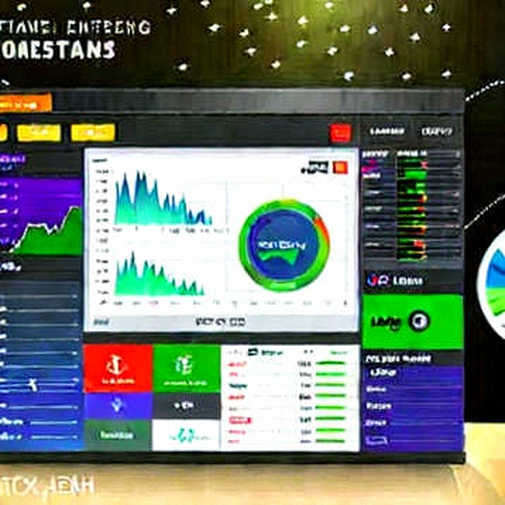
The query volume graph was the first thing I checked this morning. It wasn't down. Not yet. But the signal is already in the codebase of the business model. Dune Analytics just flipped the switch on its free plan, restricting it to view-only access. The stated reason? Cost. The unstated reason is the end of an era where venture capital subsidized the data habits of an entire industry.
This isn't a technical upgrade. It's an access control change at the application layer. It's a pricing strategy. And it's the most honest signal we've seen all quarter about the financial reality of running Web3's data infrastructure.
For years, Dune operated as the de facto public library of on-chain information. You walked in, pulled a book off the shelf, and started reading. The library paid for the heat, the lights, and the archiving. Now, the library has realized that the cost of maintaining the stacks is growing faster than the donations are coming in. So, the reading room is now open to all, but only the paying members get to check books out and write in the margins.
The Context: A Heavy Ledger
Dune's product is a miracle of engineering and a nightmare of economics. It ingests raw blockchain data from multiple L1s and L2s, normalizes it, parses it into relational databases, and serves it up through a magical SQL interface. The magic is the hard part. Every transaction, every swap, every NFT mint has to be decoded and indexed. This is not a static archive; it's a constantly growing, computationally hungry beast.
The cost structure is straightforward: compute for indexing, storage for the ledger, and bandwidth for the queries. In a bull market, with transaction throughput hitting highs, the data pipeline grows proportionally. Free users, running complex queries against massive datasets, are not a marketing expense. They are a direct drain on AWS credits and cold, hard cash.
The Core: The Freemium Trap Closes
Let's break down the economics with a clear head. Dune is a centralized SaaS company. It has no token to sell, no inflationary pressure to mask its burn rate. The only revenue is subscription fees. The previous model was a classic freemium funnel: attract the masses with free queries, convert the power users to paid plans. The problem is that the conversion rate likely never justified the infrastructure spend.
By moving to a view-only free tier, Dune is executing a textbook 'cost-to-serve' optimization. They are severing the long tail of users who run heavy queries but never pay. This is the 'memory leak' of the freemium model. You keep allocating resources to processes that never return a value. Dune just killed that process.
From a technical standpoint, this is a logical move. The 'View-Only Access' restriction likely requires minimal backend changes. It's a flag on the user permission table. The real change is in the product strategy. They are betting that the value of their aggregated, curated datasets is high enough that serious researchers and teams will pay for the ability to interact with the data, not just stare at it.
But here's the nuance most commentary misses. This isn't just about Dune's profit and loss statement. It's about the ecosystem's dependency on a single, centralized point of failure for data access. The cost of indexing is a real technical barrier. Dune's adjustment is a confession that the 'index and serve it all' model has a scaling limit that is purely financial, not computational. They are imposing a fee for the externalities of their own infrastructure costs.
This is the 'Technical Viability Score' dropping for the entire ecosystem. If the cost of running a centralized indexer is too high for the market leader, it validates the long-term thesis for decentralized query markets like The Graph. But it also exposes the latency issues and complexity of those alternatives. For now, Dune is the only game in town for deep, accessible analytics, and they are monetizing that monopoly.
The Contrarian: The Silent Risk of a Less Noisy Network
The obvious narrative is that this is a blow to the little guy, the independent researcher. That's true. It's a direct tax on due diligence. But the contrarian view is that this might be a net positive for data quality.
The signal-to-noise ratio on Dune has been deteriorating. The platform is flooded with duplicate dashboards, copy-pasted queries, and low-effort analysis. By restricting the ability to create and execute queries to paying customers, Dune is effectively implementing a 'proof-of-stake' for data creation. Users now have 'skin in the game.' This could reduce the spam and force a higher baseline of quality. The cost of a mistake is now literal money.
However, this is where the blind spot lies. The network effect of Dune isn't just about the number of queries. It's about the long tail of niche data sets. A random developer's dashboard for a small DeFi protocol might not drive revenue, but it provides transparency. If that developer is priced out, that data disappears. The 'library' becomes a curated bookstore. It might be cleaner, but it will have fewer obscure titles. The risk is a gradual erosion of the platform's comprehensiveness, which is its true moat.
The Takeaway: The Subsidy Has Ended
The era of free, high-quality data in Web3 is over. Dune's decision is the canary in the coal mine. It signals to the rest of the market that 'user growth at all costs' is dead, replaced by 'revenue per user.' This is a healthy correction, but it's a painful one.
For the independent analyst, the calculation has changed. The cost of research just went up. For the data infrastructure sector, the bar for entry just got higher. For the rest of us, we have to ask: if the cost of querying the blockchain is now a barrier, how many potential insights are we going to lose? The data is still on-chain, but the window to see it just got smaller.
The market will adapt. It always does. But as I look at my own dashboards, I'm not thinking about the queries I can't run. I'm thinking about the ones I never thought to write, because the person who would have written them just got locked out. Code is the only law that compiles without mercy, and the code for Dune's business model just got a major upgrade.
I've spent years auditing smart contracts and benchmarking execution environments, and this move feels less like a technical optimization and more like a hard fork in the business logic. It's a choice between the idealism of open data and the pragmatism of keeping the lights on. The choice has been made. The rest of the industry should take note of the compiler's output.
For the next three to six months, watch the query counts, not the token price. Watch the migration of independent developers to alternative platforms. The liquidity of data is being re-priced, and the first movers to offer a more economically sustainable model will capture the overflow. This is not a bug in the system. It's a feature of the market finally maturing.