Title: When Fame Becomes the Attack Vector: The KYLIE Meme Coin Hack and the Fragile Intersection of Social Media and Crypto
Article:
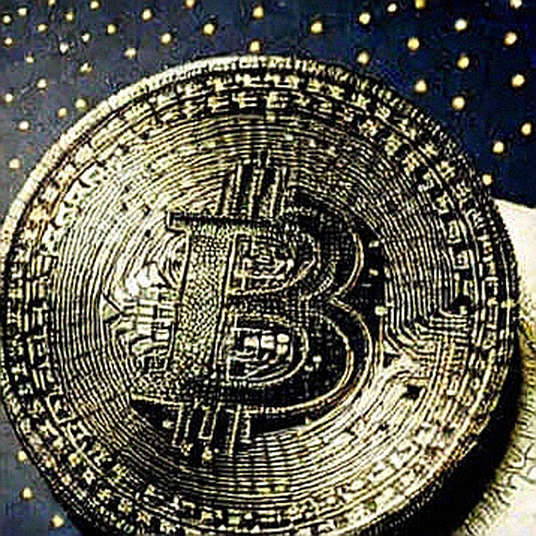
The market isn’t bullish; it’s leveraged to the brink of its own illusion. And nowhere is that illusion more fragile than when a single, compromised X account can mint a six-figure market cap from thin air, only to watch it evaporate into the digital ether. On a seemingly ordinary Tuesday, Kylie Jenner’s X account—a platform with a reach that could move beauty products and lip kits in minutes—became the unwitting vehicle for a crypto heist. The post was simple: a promotion for a meme coin called KYLIE. Within minutes, the token’s market cap touched a peak of $1.19 million. Within hours, it had cratered by 68%. The post was deleted. Jenner remained silent. The smoke cleared, but the scent of burnt capital hung in the air.
We are not looking at a technological breakthrough or a new protocol. We are looking at a weaponized social graph. The target was a celebrity. The vector was social engineering. The casualty was retail confidence. This isn’t a story about crypto; it’s a story about how the architecture of our trust is being exploited by the very tools we built to make it easier. Based on my two decades in cryptography and a professional history of watching both ICOs and DeFi summers come and go, this event deserves more than a surface-level shrug. It demands a dissection of the mechanics, the incentives, and the gaping security hole in the Web3 ecosystem’s social layer. Let’s break it down.
The initial reports from CoinDesk painted a clear picture. The event was a classic social engineering attack, not a breach of the blockchain itself. The attack surface wasn't a smart contract flaw; it was a social media account. This is a crucial distinction that the industry often blurs. The attack wasn't on the code; it was on the conductor.
From a technical standpoint, the KYLIE token is a zero. It has no innovation, no unique mechanism, and no discernible purpose. It was a single-purpose vehicle designed for the "pump and dump." The token’s lifecycle—from deployment to the $1.19 million peak to the 68% collapse—is the classic trajectory of a "honeypot" or a "rug pull" in its most primitive form. The contract likely contained a backdoor, allowing the deployer to restrict selling or simply pull the liquidity pool (LP) after enough victims piled in. It's a $1.19 million smoke signal that is meant to be mistaken for a foundation.
Based on my experience auditing projects in the 2017 ICO era, I can tell you the pattern is as old as the scams themselves. The only thing that changes is the wrapper. The real technical failure here is not the token code—it's the security of the X platform itself. Despite the proliferation of 2FA and hardware keys, SIM-swapping attacks and internal leaks remain potent. This attack vector is a reminder that the Web3 ecosystem is still firmly bolted to the security whims of centralized social networks. The bridge between "crypto" and "the real world" is a single point of failure, and it’s controlled by a platform that has its own set of complex issues.
The Token's Anatomy
The tokenomics of KYLIE are as transparent as mud. The supply model was opaque, and there was no unlocked schedule or vesting period. In the classic model of a malicious actor, the team and early "investors" are the same wallet addresses controlled by the hacker. They held a significant percentage of the supply, ensuring a massive concentration of power. The "community" share is a pittance, designed to be sold to the public to drive the price up. There is no incentive to hold, no revenue generation, and no utility. The entire economic model is a negative-sum game. For one person to win, someone else must lose. The 119% of the market cap is paper wealth, a temporary illusion that vanished when the hacker decided to cash out.
We're seeing the same mechanics we saw in the 2020 DeFi yield traps, just repackaged. High APY is just delayed pain, but in this case, the pain was instant. The "value" of KYLIE was not based on any fundamental metric. It was based on a single, non-authenticated signal from a celebrity account. This is the purest form of a negative-sum game, where the "value" is created entirely from the trust of one individual. It’s a stark reminder that in this industry, "fundamentals" can be a photoshopped screenshot of a dead girl.
The Market's Perspective
From a macro perspective, the market's response is a collective shrug. The event is a micro-event, isolated to the token itself. It will not move the broader indices. It will not trigger a liquidation cascade. But its psychological impact is more significant. It feeds the FUD machine. It reinforces the "meme coins are scams" narrative, which is a reminder of the fragility of the entire crypto reputation.
This is not a market-level event; it's a cultural one. It solidifies the distrust of the "celebrity endorsement" as a signal. The market's memory is short, but the mistrust is long. It's a negative externality that affects everyone, from the legitimate projects to the serious DeFi protocols. It's a reminder that the "market" isn't just a chart; it's a collection of psychological states. And when a single hack can so easily deploy a fake reality, it raises a systemic risk: a risk to the trust infrastructure itself. This is the systemic risk that doesn't show up on a balance sheet.
The Regulatory and Security Vacuum
The event is a regulatory minefield. In the United States, where Kylie Jenner and X are based, the KYLIE token would almost certainly be classified as an unregistered security under the Howey Test. The "investment of money" is present, the "common enterprise" is the token's value, the "expectation of profits" is the core motivation, and the "efforts of others" is the hacker's manipulation of the market. It's a textbook case.

However, the enforcement will likely be a token—pun intended—if it happens at all. The issue is attribution. The hacker is anonymous, and the crime is a social engineering attack. This puts the pressure on the platform itself, which might be forced to comply with subpoenas and provide login IP addresses to law enforcement. This is where the real action might be. The event exposes the gap between the decentralized nature of the blockchain and the centralized nature of the social platform. The security assumption is broken, and the recovery is not.
The "Social Layer" and Its Discontents
This event forces us to confront a fundamental flaw in the Web3 stack. We’ve built complex financial infrastructure on top of a social layer that is inherently fragile. The "social layer" is a trusted third party, and we all know how those end in this industry.
The attack is a reminder that the "bridge" between the digital asset world and the mainstream is not the technology, but the narrative. And that narrative is often controlled by a single individual. The threat isn't a hostile government with quantum computers; it's a simple phishing link and a high-traffic account. The security of the entire system is not as strong as its most basic component.
The "Proof of Social" mechanism, where the identity is the collateral, is a fragile foundation. The market’s trust is a direct function of the security of these social profiles. And the security of these profiles is not in the hands of the crypto ecosystem. It's in the hands of a third-party platform, which has its own set of priorities.
The Bigger Picture: The "Systemic Risk" of Social Engineering
Let’s zoom out. This is not just a hack. It's a textbook case of how the "meme coin" phenomenon has become a target for malicious actors. It is a form of digitalized social engineering, where the victim is the collective audience of a famous person. The hack is a systematic flaw in the way we perceive trust in the digital age. We are moving from a world of "code is law" to a world of "influence is law." And the influencers are the vulnerable points.
The systemic risk isn't the token itself. The systemic risk is that this type of attack will become more frequent. We’ve seen it with other celebrities; we’ve seen it with influencers. The "Kylie" hack is just the latest iteration. The attack is a reminder that the system is built on a house of cards. The "trust" in a project is often just a function of the trust in its frontman.
The Future: Signal, Noise, and the "Thesis Broken"
The "thesis" here is not "blockchain is broken." The thesis is "the trust layer is broken." The blockchain works as intended. The token worked as it was designed. The system functioned flawlessly—for the hacker. The rest of us are left to pick up the pieces.
The opportunity, if there is any, is in the security services. The demand for "social account monitoring" and "anti-phishing" services will rise. This is a catalyst for the "security as a service" niche. But it’s also a long-term signal. The rise of decentralized social platforms (Farcaster, Lens) might accelerate, but it's not a near-term shift. The trust in centralized social platforms is the ultimate weak link.
For the individual, the lesson is clear: be skeptical of the signals from the social graph. The "celebrity endorsement" is no longer a signal; it's noise. The only real signal is the code itself. And in the case of KYLIE, the code was a bomb. The capital was preserved by not touching it. The "thesis" of the "meme coin" is now a "thesis broken." The capital was preserved, and the lesson is clear.
A Call for a Harder Standard
We are in a bull market, and the euphoria is back. But that euphoria is a noise that masks the technical flaws. The market is a theater, and the actors are the famous names. The "audience" is the retail investors who are FOMOing in. As a macro watcher, I can't tell you to be a fundamentalist, but I can tell you to be a skeptic.
The industry needs to adopt a harder standard. We need to demand more than just "smart contract audits." We need to audit the entire security model, including the social layer. The "Code is Law" is a catchy slogan, but the "code" is only as strong as the "key" that controls it.
The next time you see a celebrity promoting a token, remember this event. Remember the $1.19 million. Remember the 68% drop. The market is a dangerous place, and the "smoke signals" are not "foundations." They are just the warnings of a deeper, systemic risk.
The question is, will we listen? Or will we just delete the post and move on to the next one?