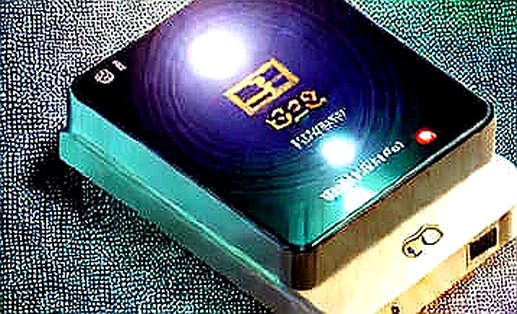
On a podcast published by Bitcoin News, a former exchange operator described a device that reads your seed phrase off a hardware wallet's screen, hides from the wallet's own self-test, and leaves no trace a normal user could ever find. The only way to see it, he said, is an X-ray.
The number attached to this story is $100 million. The cost to build the device, he claimed, was $5 million. The theft window, he said, was 24 hours — $86 million moved out before anyone understood what had happened.
I read this the way I read a bug report. I look for the trace, not the headline. And the first thing the trace shows is that this is not a confirmed incident. It is one voice, on one podcast, hosted by the CEO of a direct competitor to the company being accused.
That distinction is the entire article. Code does not lie, but it does leave traces — and right now, this story has left no trace that anyone outside the room can verify.
The Setting: Hardware Wallets Sit at the Top of the Trust Pyramid
To understand why this story spread so fast, you have to understand where a hardware wallet sits in the crypto stack.
A hardware wallet is not an app. It is the final physical custodian of a private key. Everything downstream — every DeFi position, every NFT, every exchange withdrawal, every signature — depends on that one small device telling the truth. When the device lies, nothing above it matters. The smart contracts are still sound. The consensus layer is still running. The chain does not care. But the human who owns the key has already lost.
This is why the "not your keys, not your coins" doctrine exists. Self-custody is a values position disguised as a technical one. The entire promise is that trust is removed from the intermediary and placed in mathematics. You verify, you don't assume. You hold the key, so you hold the coin.
The Ledger attack story attacks exactly that promise. It says: you held the key, but the hardware betrayed you. Not the code. Not the cryptography. The object in your hand.
Ledger is a French company, Ledger SAS. It sells the most widely used hardware wallets in the market. Its security model rests on a closed-source Secure Element — a hardened chip that resists physical extraction. That closed design is both Ledger's moat and its most criticized feature. You cannot audit what you cannot see. You are asked to trust the factory.
The story claims that trust was broken at the factory's edge. Specifically, at the distributor. A Malaysian distribution partner, the account says, was the injection point — somewhere between the production line and the user's door, a device was physically modified.
Then there is the other voice. The podcast was co-hosted by Zach Herbert, CEO of Foundation, a company that makes the Passport hardware wallet — a direct competitor to Ledger. That is not a disqualifying fact. Competitors can reveal real problems. But it is a structural fact, and structure shapes incentives. When the person moderating the discussion profits from the conclusion, the conclusion deserves more scrutiny, not less.
And behind both voices stands Mark Karpelès, the former CEO of Mt. Gox. That name carries weight in this industry, and not the kind that builds trust. Mt. Gox lost roughly 850,000 BTC. Karpelès was arrested and convicted in Japan. He is now the person telling the world that he discovered a nation-state-grade supply chain implant and that Ledger ignored him for three weeks.
Trust is verified, never assumed. That rule applies to whistleblowers too.
So let us separate what the story states, what can be reasonably inferred, and what is pure speculation. That is the only honest way to read a single-source claim.
The Attack Chain, Reconstructed
The account describes a linear chain. I will lay it out the way I would lay out a transaction trace.
Distribution and logistics — the Malaysia distributor — is the first node. This is where the physical implant is introduced. The device is opened, modified, and resealed before it ever reaches a customer.
Inside the device, the account says, sits a hidden cellular modem. This is the critical technical claim. A cellular modem is a radio. It needs power, an antenna, and a network. A hardware wallet is a low-power device with a small battery — if it has one at all. Ledger's devices are typically powered over USB. Fitting a modem that can transmit a seed phrase out of a sealed enclosure, without draining the host device or tripping any power anomaly, is a serious engineering problem. It is not impossible. It is simply the kind of claim that demands a teardown, not a podcast.
The modem's job, per the account, is to read the seed phrase displayed on the device screen. This is where the mechanism gets specific. When you set up a Ledger, the screen shows your 24 recovery words, one at a time. That screen is the trust anchor. It is supposed to be the one output channel that cannot be intercepted by software, because it is wired directly to the secure element. The implant, the story says, taps that channel.
Then comes the part that should make every engineer stop and read twice: the account claims the attack works even if the user has set a passphrase.
I want to slow down here, because this is the load-bearing claim of the whole narrative, and it has a logical gap.
A BIP39 passphrase — the optional "25th word" — is not stored on the device. It is never written to memory. It is combined with the 24 words at the moment of signing, in the secure element, to derive a completely different wallet. The design intent is precise: an attacker who has your 24 words still cannot reach a passphrase-protected wallet. That is the entire reason the feature exists. It is the last line of defense for exactly this scenario — physical compromise of the seed display.
So how does an implant that only reads the screen defeat a passphrase?
There are only two honest answers. Either the device also intercepted the passphrase as the user typed it — which means the implant is not just a screen reader but a full input-and-output tap, a meaningfully larger and more detectable modification. Or the wallet in question was never actually passphrase-protected, and the account is conflating "seed phrase leaked" with "funds stolen." The second explanation is far more likely, and far less dramatic. In the red, we find the structural truth — and here, the red is that the narrative may be merging two separate failure modes into one story.
I have done this kind of reverse-engineering before. In 2022, when Terra/Luna unwound, I spent three weeks tracing the Anchor Protocol's incentive loop, line by line, until the unsustainable structure was visible on a whiteboard. The lesson from that exercise applies here: when a story is too clean, the seams are usually hidden in the part nobody wants to examine. The passphrase claim is the seam.
There is a third technical element. The implant, the account says, bypasses Ledger's self-check. Ledger devices run a genuine-check at setup — a cryptographic attestation that the firmware is authentic. This is a strong defense against firmware tampering. But it is a defense against software, not against a person who has physically opened the case. If you replace the screen or insert a tap between the screen and the board, the genuine-check still passes. The firmware is real. The hardware path is not. This part of the story is internally consistent, and that is worth noting. It is the strongest technical claim in the whole account.
The final node is on-chain. The funds move out. The account says $86 million left within 24 hours, on a total exposure of $100 million.
A $100 million single-target theft is not a mass-market event. That number does not describe thousands of retail users losing small balances. It describes one whale, or one institution, or a small cluster of them. The attack is targeted, not universal.
This matters more than anything else in the story, and I will return to it.
The Economics of the Implant
The account puts the device's manufacturing cost at $5 million. It also says the device is detectable only by X-ray.
Take those two claims together and follow them to their conclusion.
If a single implant costs $5 million to build, and the attack yielded $100 million, the return on that one operation looks strong — a 20x multiple. That is the number that makes the story feel credible at a glance. But an operation is not a product. The question is not whether one implant pays for itself. The question is whether the implant can be replicated. Can the design be copied cheaply? Can it be installed at scale across a distribution channel without detection?
The story's own details argue against scale. A device detectable only by X-ray, costing millions per unit, cannot be mass-produced and inserted into thousands of retail boxes without someone noticing. Supply chain security, even at a mid-sized electronics firm, includes random teardowns and inventory audits. A $5 million-per-unit implant is not a supply chain compromise in the industrial sense. It is a bespoke assassination, aimed at a specific target.
That is the opposite of what the viral framing suggests. The framing says "all Ledger users are at risk." The economics say the attack is not built for all Ledger users. Yield is a symptom, not the cure — and here, the headline yield is a symptom of narrative economics, not of attack economics.
This is where I want to bring in my own experience with hardware trust models, because the economics of the implant mirror a problem I have seen at the software layer.
In 2017, I taught myself Solidity and spent eight weeks manually auditing the 0x Protocol v1 exchange contract. I found three reentrancy vulnerabilities and submitted them to the project's GitHub. That work taught me something that has held for nine years: the cost of an exploit is the best predictor of its target. Cheap exploits hit everyone. Expensive exploits hit someone. Reentrancy was cheap — anyone could trigger it, so it threatened the whole contract. A $5 million physical implant is expensive — so it threatens someone specific. The price of the attack tells you who it was built for.
Read the Ledger story through that lens and the panic narrative collapses under its own numbers. The story describes a precision weapon. The market heard a weapon of mass destruction.
The Distribution Model Is the Real Root Cause
Strip away the drama and the technical claims, and one structural fact remains. The attack, if real, happened in the distributor layer.
This is the part of the industry nobody audits, because it is boring and it is off-chain. For fifteen years, the crypto security conversation has lived on-chain. Smart contract audits, bridge reviews, oracle manipulation, MEV. Billions of dollars and thousands of engineer-hours have been poured into securing code that executes in a public, verifiable environment.
Meanwhile, the device that holds the key ships in a cardboard box, passes through third-party logistics, and arrives at your door with a tamper seal that most users never check.
That is the asymmetry the story exposes, whether or not the story is fully true. The trust chain of self-custody runs from the chip fab, through the assembler, through the distributor, through the courier, to your hand. Every link is a physical, human, non-cryptographic process. And the entire security budget of the ecosystem has been spent on the one part of the chain that was already verifiable.
The economics of hardware wallets push them toward this weakness. A hardware wallet is a one-time hardware sale. There is no recurring revenue. That model creates pressure to expand the channel, cut logistics costs, and reach more markets through third-party distributors. Every distributor added is a new injection point. The business model and the security model are pulling in opposite directions.
I saw a version of this in 2020, during DeFi Summer, when I deployed $5,000 across Uniswap and Compound to test liquidity mechanics. I did not just trade. I forked the Compound source code to understand the interest rate model, and I ran local nodes to simulate yield calculations. What that experiment showed me was that fragility hides in the assumptions people do not model. Everyone modeled the interest curve. Nobody modeled what happens when a pegged asset loses its peg. The fragility was not in the visible mechanism. It was in the invisible assumption.
The distributor layer is the invisible assumption of hardware wallets. It is the thing everyone assumes works, so nobody checks. Stability is a bug in a volatile system — the assumption that the supply chain is stable is precisely the bug.
The story's discussion of alternatives confirms this reading. The podcast raised MPC wallets — multi-party computation — as a response. MPC replaces a single hardware trust anchor with a distributed cryptographic one. No single device holds the whole key, so no single physical implant can drain the whole wallet. That is a genuine architectural answer to a genuine architectural problem. But MPC is not free. It introduces a new coordination layer — node operators — and that coordination layer is a new trust surface. You have traded a physical single point of failure for a social one.
The competitor on the podcast makes an open-source, verifiable hardware wallet. That is also a genuine answer: if users can inspect the hardware and verify the supply chain, tampering becomes detectable. But open hardware does not solve the distributor problem either. An open design still ships through a box, through a courier, through a warehouse. Verifiability helps only if the user actually verifies, and almost no users do.
The Information Asymmetry Is the Actual Danger
Here is where I will take the contrarian position, and I will state it plainly.
The most dangerous element of this story is not the implant. It is the source structure.
Consider what we actually have. A single former exchange operator, with a documented history of catastrophic operational failure and a criminal conviction, claims to have discovered a state-of-the-art physical implant. He brings it to a podcast hosted by the CEO of the victim company's direct competitor. The victim company — Ledger — is not present and, per the account, did not respond for three weeks. No independent security firm has examined the device. No X-ray image has been published. No teardown has been shown. No chain-of-custody documentation exists. The entire technical case rests on one person's description of a device that only he has seen.
Set aside, for a moment, whether the story is true. Ask a different question: what is the probability that a claim with this structure is exactly accurate as told?
In my experience, stories with this structure are rarely wholly false and rarely wholly true. They are usually part true, part exaggerated, and part merged with adjacent narratives. The supply chain attack vector is real — hardware implants are a documented technique used by serious actors against serious targets. But the specific numbers — $100 million, $5 million, 24 hours, X-ray-only detection — are the kind of details that grow in the telling. They are unfalsifiable. You cannot disprove a $5 million cost estimate. You cannot disprove a claim that only an X-ray would reveal the device. Unfalsifiable claims are exactly the claims that spread.
And the framing has an audience. "Your hardware wallet can be compromised" is the single most destabilizing sentence you can say to a self-custody maximalist. It does not need to be true to move markets and minds. It only needs to be plausible.
Who benefits from the framing? The open-hardware competitors, who can now market verifiability against a compromised closed design. The MPC and multi-signature providers, who can market distributed trust against a failed single point. And, in a darker reading, the centralized custodians, who can quietly point at this and say: see, self-custody has a hole in it that we do not have. That third beneficiary is the one that should concern anyone who actually believes in decentralization. Governance is the art of managing disagreement — and the first casualty of an unverified story is the ability to disagree with it.
There is a real cost to spreading an unverified claim. If users panic-migrate off hardware wallets and back into centralized custody on the strength of a single podcast, the net security of the ecosystem goes down, not up. Centralized custody has its own failure modes, and they are worse — they are the ones that took Mt. Gox down in the first place. The irony is sharp: the former CEO of the most catastrophic custodial failure in crypto history is now, perhaps unintentionally, providing the narrative ammunition for a return to custodial risk.
This is the trap. The story may be true. It may be false. But its structure guarantees that most people will act on it before anyone verifies it. That is a failure of epistemic hygiene, and it is more dangerous than the implant.
What a Rational Response Actually Looks Like
Strip the emotion out and the response is straightforward. I will give it as I would give it to a client.
For the ordinary Ledger user: no immediate action is warranted by this story alone. The attack as described is targeted at high-value holders. It is not a mass-market vulnerability. Changing your entire security posture based on an unverified single-source claim is itself a risk — you are more likely to make an operational error during a rushed migration than to be hit by a bespoke $5 million implant.
For the high-net-worth holder or institution: the story is a reminder, not a revelation. Do not rely on a single hardware trust anchor. Layer defenses — hardware plus passphrase plus multisig or MPC. The goal is not to trust one device more. The goal is to make any single device's compromise survivable.
For the industry: the real lesson, if any part of this is true, is that off-chain physical supply chain security is an unpriced risk. The ecosystem has spent a decade auditing code and almost nothing auditing boxes. That gap will not close on its own. It needs standards — tamper-evident packaging, verifiable supply chains, independent random teardowns — and those standards need to become infrastructure, not marketing.
And for everyone reading the headlines: wait. Ledger's response is the missing piece. Until the accused party speaks, and until an independent firm examines the device, the honest label for this story is "unverified warning case," not "confirmed industry disaster." I learned that discipline the hard way — not from crypto, but from the habit of reading a trace before drawing a conclusion. The habit does not change because the story is exciting.
I will close where I opened. Code does not lie, but it does leave traces. When a story leaves no trace, the correct engineering response is not belief and not dismissal. It is the suspension of judgment until evidence arrives.
The deeper question this story raises is not about Ledger at all. It is about whether self-custody, the founding promise of this entire industry, can survive the moment its hardware becomes a target. The answer is not a better device. The answer is an architecture in which no single device needs to be trusted — where keys are split, where trust is distributed, where verification replaces faith.
We build frameworks, not just tokens. The frameworks that matter now are the ones that make betrayal structurally impossible, not merely unlikely.
The implant may or may not exist. The lesson does. And the next time someone hands you a device and asks for your faith, remember the only question worth asking: who verified it, and how?