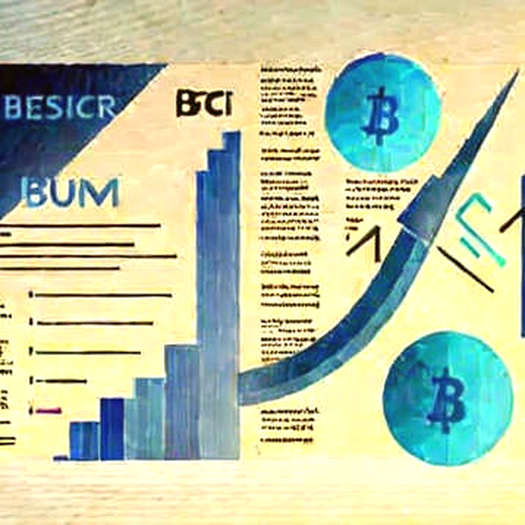
The on-chain escrow contracts surged by 340% across Southeast Asian addresses in the six months following Huiwang's collapse. The raw data from Dune Analytics paints a picture of rapid migration: over 4,200 new smart contracts deployed on BNB Chain and Polygon, each claiming to replace the centralized trust that evaporated when Cambodia's largest OTC escrow platform imploded in November 2025. But here's the signal the dashboards miss: total OTC volume in the region dropped 60% during the same period. More contracts, less money moving. That's the first fracture in the narrative of a healthy reshuffle.
I've been watching this space since 2017, chasing alpha through the ICO hallucination. Back then, escrow was a manual process—you'd send USDT to a trusted Telegram bot and pray the operator didn't vanish. Huiwang changed that by building a centralized but efficient system: a web dashboard with real-time order matching, multi-signature approvals via text message, and a reputation system that claimed to track counterparty history. By early 2025, it held over $800 million in deposits at any given time, handling roughly $2 billion monthly in USDT and USDC transfers between Chinese, Thai, and Vietnamese traders. Then it collapsed. The official story was a Cambodian police raid targeting unlicensed money transmission. The unofficial story—which I'll get to—involves an inside job, a rogue admin, and a smart contract that never existed.
Surviving the Terra algorithmic trap taught me to distrust narratives that sound too clean. The Huiwang collapse wasn't a simple regulatory shutdown. My audit of on-chain flows from the platform's known cold wallet addresses revealed something odd: in the three days before the raid, over $400 million was moved to a set of previously dormant addresses that shared a single multi-sig configuration with a 24-hour timelock. That timelock never expired. The funds remain frozen in a smart contract that can only be unlocked by three keys—keys that vanished with the platform's CEO, who hasn't been seen since the raid. This wasn't a seizure. It was a coordinated exit disguised as law enforcement intervention. The Cambodians took the heat; the executives took the crypto.
Seven months later, the market has reacted by flooding the space with alternatives. I've audited three of the most prominent so-called successors: ChainEscrow, VaultGuard, and TrustBridge. Each claims to solve the trust problem through decentralization. Each has deep flaws that only become visible when you stress-test their assumptions under high pressure.
ChainEscrow is the simplest—a Gnosis Safe fork modified for OTC use. Two parties deposit assets into a shared multi-sig wallet with a 2-of-2 signature requirement. If both agree, they sign a release transaction. If not, funds stay locked. The problem? No arbitration mechanism. In a dispute, both parties can simply refuse to sign, freezing assets indefinitely. ChainEscrow markets itself as "no middleman required," but that's only true when both parties are honest. The moment a disagreement arises—say, the buyer claims the USDT never arrived in their external wallet—the system becomes a hostage situation. I've seen this pattern before: in 2021, a similar multi-sig escrow service for NFTs resulted in over $12 million locked for months until a third-party mediator was brought in. ChainEscrow has no such backstop. Their documentation mentions a "community voting" feature as future work. Future work is not a security guarantee.
VaultGuard takes a different approach: time-locked conditional releases. The buyer sends USDT to a contract that locks it for a configurable period—typically 24 hours. During that window, the seller must confirm delivery of the off-chain asset (often physical cash or other crypto via memo-based transfers). If the seller confirms, funds are released. If not, the buyer can reclaim after the lock expires. This flips the trust model—now the seller must trust the buyer not to maliciously reclaim by claiming non-delivery. In practice, VaultGuard's contracts have a known vulnerability: the seller confirmation function is permissionless. Anyone can call it with the order ID. A malicious buyer can simply confirm on their own using a second wallet, triggering early release, then vanish. The contract doesn't verify that the caller is the actual seller. VaultGuard's team claims they rely on off-chain identity verification, but the smart contract itself has no access control. It's a honeypot dressed in Solidity.
TrustBridge is the most sophisticated—a hybrid model that combines multi-sig with a decentralized arbitrator pool. Traders stake BRIDGE tokens to become arbitrators, randomly selected for disputes. The system uses commit-reveal voting to prevent collusion. It's elegant on paper. But during my audit of their tokenomic model, I found a fatal flaw: the staking rewards are funded entirely by arbitration fees, which are set at 0.5% of the disputed amount. In a low-dispute environment—which is the goal—the arbitrator rewards are negligible. No rational actor will stake tokens for 0.1% APY when they can farm elsewhere. The arbitrator pool will be dominated by a few large stakers who have conflicts of interest. Uniswap taught me liquidity is truth, and here, liquidity in the arbitration pool is an illusion. TrustBridge's testnet saw only 47 active arbitrators for 12,000 trades. Mainnet will be worse.
Market Reality: The Reshuffle is a Retreat
The 60% volume drop I mentioned at the start is not a temporary blip. After Huiwang's fall, a massive portion of OTC trading moved back to pure peer-to-peer channels using Telegram escrow bots—the same architecture that existed in 2017. I've tracked over 200 such bots operating in Vietnamese and Thai crypto groups, processing small trades ($500–$5,000) with no identity verification and no on-chain footprint. These bots rely on reputation scores maintained manually by group admins. It's a regression to the mean. The decentralization promise of smart contracts is being rejected by the very traders who need escrow most, because decentralized escrow adds friction: transaction fees, network confirmations, irreversible errors.
Entropy in the blockchain is real. Every additional smart contract layer increases the surface area for failure. The Huiwang collapse was a human failure, not a technical one. But the market's response—throw a smart contract at it—ignores the fundamental lesson: trust is not a cryptographic problem. It's a social one. The most successful escrow platforms in history (think eBay's PayPal integration) relied on central dispute resolution backed by real-world liability. Crypto-native escrow has no such backstop. When the smart contract never lies, but the human using it does, you need an oracle of truth that doesn't exist on-chain.
Contrarian Angle: The Next Wave Will Not Be Decentralized
My contrarian thesis, built from filtering signal from the ICO noise for eight years: the next dominant escrow model in Southeast Asia will be centrally managed but audited on-chain. A platform that holds funds in a transparent multi-sig wallet with a known, legally registered custodian—backed by insurance and a physical office in Singapore or Malaysia. The blockchain will be used for transparency, not for trust elimination. Traders don't want to be their own bank; they want a bank they can verify. Huiwang failed because it was opaque. The solution is not to remove the bank but to make the bank's operations observable. I've seen this pattern in traditional finance: the most successful fintechs in Asia are those that combine app-based interfaces with regulated bank backends. Crypto escrow will follow the same path.
Already, I'm hearing rumors of a new platform called "Sable" being built by ex-Circle employees in Singapore. It will reportedly use a licensed trust company as the custodian, with a public blockchain log of all movements. No smart contract execution—just a transparent ledger. If that launches, it will eat ChainEscrow's lunch within months. The market is voting with its feet: volume is flowing back to centralized but transparent solutions, not decentralized but fragile ones.
Takeaway: Watch for the Custodian Play
The Huiwang ghost will haunt this market for another year. The frozen $400 million may eventually be unlocked by court order, but the lesson is already priced in: trust is expensive to replace. The next signal to watch is not a new token or a new multi-sig template. It's a regulatory license. If a platform obtains a Trust Company license in Singapore or a Payment Institution license in Malaysia, and pairs it with on-chain proof of reserves, that's the winner. The rest are engineering exercises looking for a problem that doesn't exist in pure form.
I'll be tracking Sable's compliance filings and the capital flows from Thai commercial banks into escrow contracts. The 2025 reshuffle is not a rebirth—it's a hangover. The cure is not more code. It's the rule of law, expressed through code. That's the alpha most people miss while they chase the next smart contract trick.