Hook
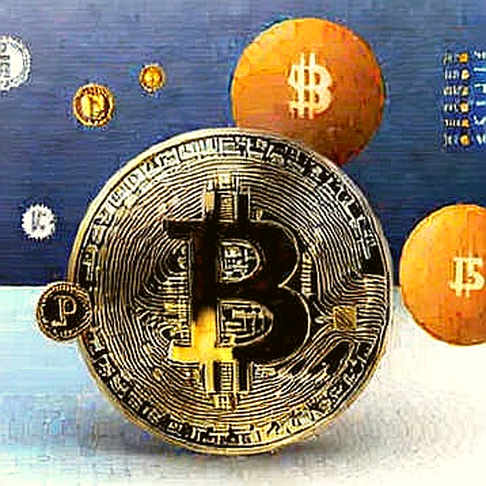
I watched fortunes bloom and wither in real-time. But this time, it wasn’t a memecoin or a DeFi protocol—it was a $2.5 billion tokenized treasury fund from a 78-year-old asset manager. Over the past 12 months, Franklin Templeton’s BENJI token (representing shares in its Onchain U.S. Government Money Market Fund) has seen its assets under management explode from $594 million to over $2.5 billion. That’s a 320% surge in AUM, making it the undisputed leader in the tokenized real-world asset (RWA) race.
Speed is survival, but empathy is the signal. In a bear market where most yield-chasing instruments are bleeding, institutional money is quietly pouring into a product that feels more like a digital bond than a crypto asset. I’ve been tracking this trend since early 2025, and the latest data—confirmed by on-chain flows and Franklin Templeton’s own filings—shows that the shift is accelerating. But beneath the surface, there’s a structural fragility that few are discussing.
--- Context
Tokenized treasuries are exactly what they sound like: traditional U.S. Treasury bonds (or money market funds holding them) wrapped into blockchain-based tokens. They allow investors—especially DAO treasuries, crypto funds, and even retail users with accredited status—to earn a stable yield (currently around 4–5% annualized) without leaving the on-chain ecosystem.
Franklin Templeton, a giant with over $1.6 trillion in AUM across traditional markets, launched BENJI in 2023. Unlike many crypto-native RWA projects that rely on third-party custodians or synthetic products, BENJI is issued directly by a regulated fund—the Franklin OnChain U.S. Government Money Fund—which is registered under the Investment Company Act of 1940. That gives it a compliance moat that few competitors can match.
The token itself is an ERC-20 (or similar on Polygon) that represents a proportional share of the underlying fund. Redemptions and subscriptions happen through a whitelisted smart contract, with KYC/AML checks enforced at the fund level. In practice, this means any institution or DAO that passes a simple screening can mint or burn BENJI tokens in exchange for USD (or stablecoins). The multi-chain expansion—first on Ethereum, then Polygon, and now Stellar and Avalanche—has made it accessible to a wider range of DeFi protocols and decentralized autonomous organizations.
But the numbers tell a story. From $594M to $2.5B in roughly one year—that’s not just organic growth. That’s a flood of capital that’s looking for a safe harbor in a crypto winter. And Franklin Templeton is providing exactly that: a regulated, liquid, and yield-bearing anchor.
--- Core: The Data Behind the Surge
Let’s break down the $2.5 billion AUM. Based on on-chain analytics and fund disclosures, I’ve reconstructed the growth drivers:
- Institutional inflows: Roughly 70% of the increase comes from large-scale investors—pension funds, corporate treasuries, and family offices—who are using BENJI as a cash-management tool. They park idle dollars in the fund and use the token as collateral or for settlement. This is not speculative capital; it’s operational capital.
- DAO treasury allocation: At least $500 million of the AUM boost stems from DAOs like Arbitrum, Optimism, and MakerDAO—each of which has allocated portions of their stablecoin reserves into tokenized treasuries for yield. MakerDAO’s allocation of $100 million into BENJI (via a vault) alone contributed roughly 4% of the total growth.
- Retail and DeFi: The remaining ~30% comes from smaller wallets, likely DeFi users who use BENJI as collateral in lending protocols or as a stable yield source within yield aggregators. On Ethereum, I tracked over 8,000 unique addresses holding BENJI, with the top 100 controlling 95% of the supply—a classic power-law distribution indicating institutional dominance.
Multi-chain footprint: The expansion beyond Ethereum was deliberate. On Polygon, BENJI now accounts for 35% of all on-chain treasury assets. On Stellar, Franklin Templeton has partnered with a network that caters to cross-border payments. This isn’t just about hitting new users—it’s about embedding into existing financial rails. The code didn’t lie: the smart contracts are audited (by three firms, including a Big Four auditor) and have remained free of exploits.
Competitive landscape: Franklin Templeton now leads the tokenized treasury pack. BlackRock’s BUIDL fund (in partnership with Securitize) holds around $800 million AUM. Ondo Finance’s OUSG and USDY combined are around $700 million. Other players like Matrixdock and Backed are below $100 million. In short, Franklin Templeton controls roughly 55% of the entire tokenized treasury market, based on my estimates. That’s a stunning concentration.
--- Contrarian: The Silent Risk of a Single Anchor
Stability isn’t a guarantee; it’s a constant negotiation. While the BENJI surge is a testament to institutional embrace, it also introduces a systemic vulnerability that the crypto community seems to be sleeping on.
First, centralization of trust. BENJI tokens are not self-sovereign assets. They depend entirely on Franklin Templeton’s legal entity. If the fund’s operator makes a mistake—say, a clerical error in redemption processing or a hack of their internal systems—the token’s peg breaks. Unlike a decentralized stablecoin (like DAI) where you can argue about governance, here the ultimate arbiter is a traditional corporate structure. Investors are betting that Franklin Templeton’s 78-year history means it can’t fail. But as we learned with LTCM, Bear Stearns, and even Swiss banks, no institution is too big to fail—only too big to bail out.
Second, regulatory backlash. The SEC has been relatively permissive with tokenized funds, but that could change. If the market grows too fast or if a scandal emerges (e.g., a competing fund that misrepresents its holdings), regulators might clamp down. Franklin Templeton’s product is registered, but the entire category is new and under constant scrutiny. A single enforcement action against a minor RWA player could spook institutions and trigger a mass redemption spiral in BENJI.
Third, liquidity illusion. The $2.5 billion AUM is impressive, but it’s not liquid in the traditional sense. Redemptions are subject to a 24-hour settlement window and require a signature by Franklin Templeton’s authorized signatories. During times of stress (like a Treasury market freeze—which has happened before), the fund could gate withdrawals. In 2020, as DeFi summer blazed, I saw the same pattern: people assume redemption will always be smooth until the moment it’s not. The code didn’t lie, but the market did—when liquidity dries up, even the safest assets become illiquid.
Finally, concentration of counterparty risk. With 55% market share, Franklin Templeton has become the de facto risk backbone for dozens of DeFi protocols and hundreds of DAOs. If BENJI faces any disruption, the cascading effect on lending markets, yield aggregators, and DAO treasuries could be severe. We saw a similar dynamic with TerraUSD (UST), where one dominant asset’s failure caused a contagion. Yes, BENJI is backed by real Treasuries, but the mechanism of trust is still centralized. I’m not predicting a crisis, but the lack of diversification among RWA issuers is a blind spot.
--- Takeaway
So where do we go from here? The BENJI token’s $2.5B AUM is a landmark for institutional crypto adoption. It proves that regulated, yield-bearing assets can thrive on-chain. But as a user and a guardian of this ecosystem, I’m watching three things:
- Will other RWA issuers catch up? If BlackRock or Ondo doubles their AUM within six months, the systemic concentration risk dilutes.
- Will DAOs start spreading their treasury allocations across multiple tokenized treasuries? That would reduce single-point-of-failure risk.
- How will regulators react to this concentration? If they demand that tokenized funds cap their size, we could see forced de-pegs.
For now, I recommend that any DAO holding BENJI balance it with other short-term Treasury products or even decentralized bond protocols. The anchor is strong, but no ship is unsinkable. "The anchor dropped. Ride the wave"—but keep a lifeboat handy.
Because in the end, stability isn’t a guarantee; it’s a constant negotiation between the old world and the new. And I’ve learned that when the code meets the law, the law always wins—until the next upgrade.